Open and reusable research data are essential to transparent science, as they enable the independent verification of results, the replication of analyses and the reuse of existing data in new research.
Oceanography relies on large and valuable datasets obtained through marine monitoring, international observing programmes and numerical models. Although an increasing number of scientific journals require authors to include a data availability statement, the underlying research data often remain inaccessible in practice.
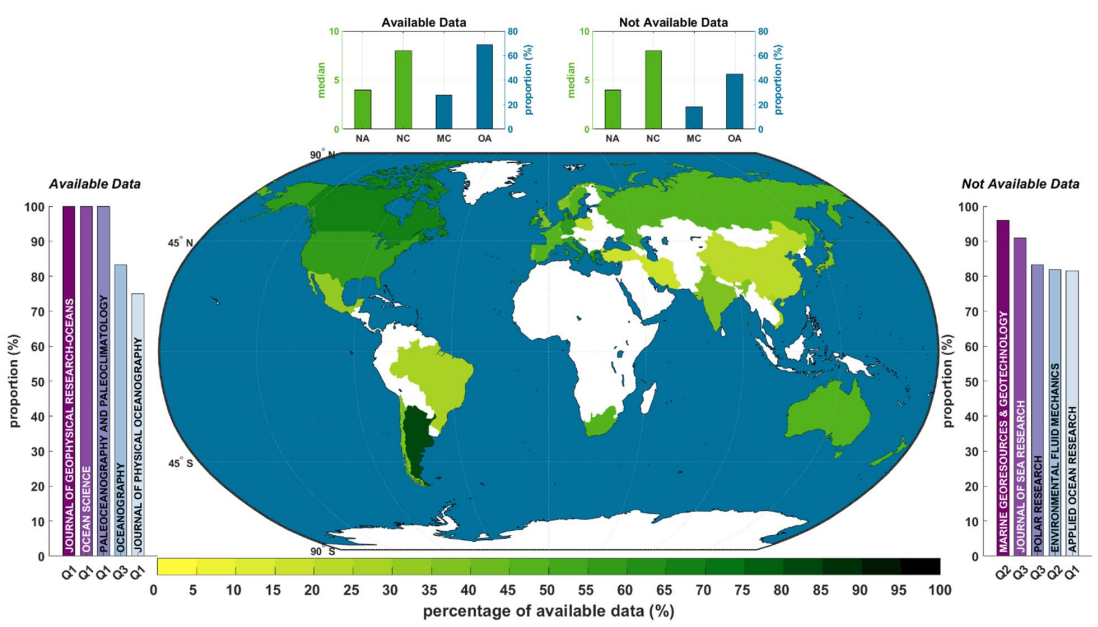
To determine how much data are genuinely accessible, Natalija Dunić from our Laboratory of Physical Oceanography and Dr Ivica Vilibić from the Ruđer Bošković Institute and the Institute for Adriatic Crops and Karst Reclamation analysed 1,400 oceanographic research articles published between 2018 and 2024.
The results, published in the highly cited international journal Research Integrity and Peer Review, show that the proportion of articles containing a data availability statement increased from 11% in 2018 to approximately 50% between 2022 and 2024. However, this increase was not accompanied by an improvement in the actual accessibility of research data.
Data were publicly accessible for 28% of the analysed articles. After the researchers directly contacted the authors of articles whose data were not publicly available, the overall proportion of articles with accessible data increased to only 36.6%. This means that the data could not be obtained for nearly two-thirds of the analysed studies.
The researchers also examined the relationship between public data availability and citation impact. Articles with publicly accessible data had 51% higher odds of being among the top 10% most cited publications. However, the results do not demonstrate that data availability itself caused the higher citation impact, as this association was also partly influenced by the journal in which an article was published.
The study demonstrates that formal data availability statements may improve the transparency of scientific reporting but are not sufficient on their own to ensure that research data are genuinely accessible. Making oceanography more open and reproducible will require stronger incentives for sharing research data and appropriate recognition of such work within research assessment systems.