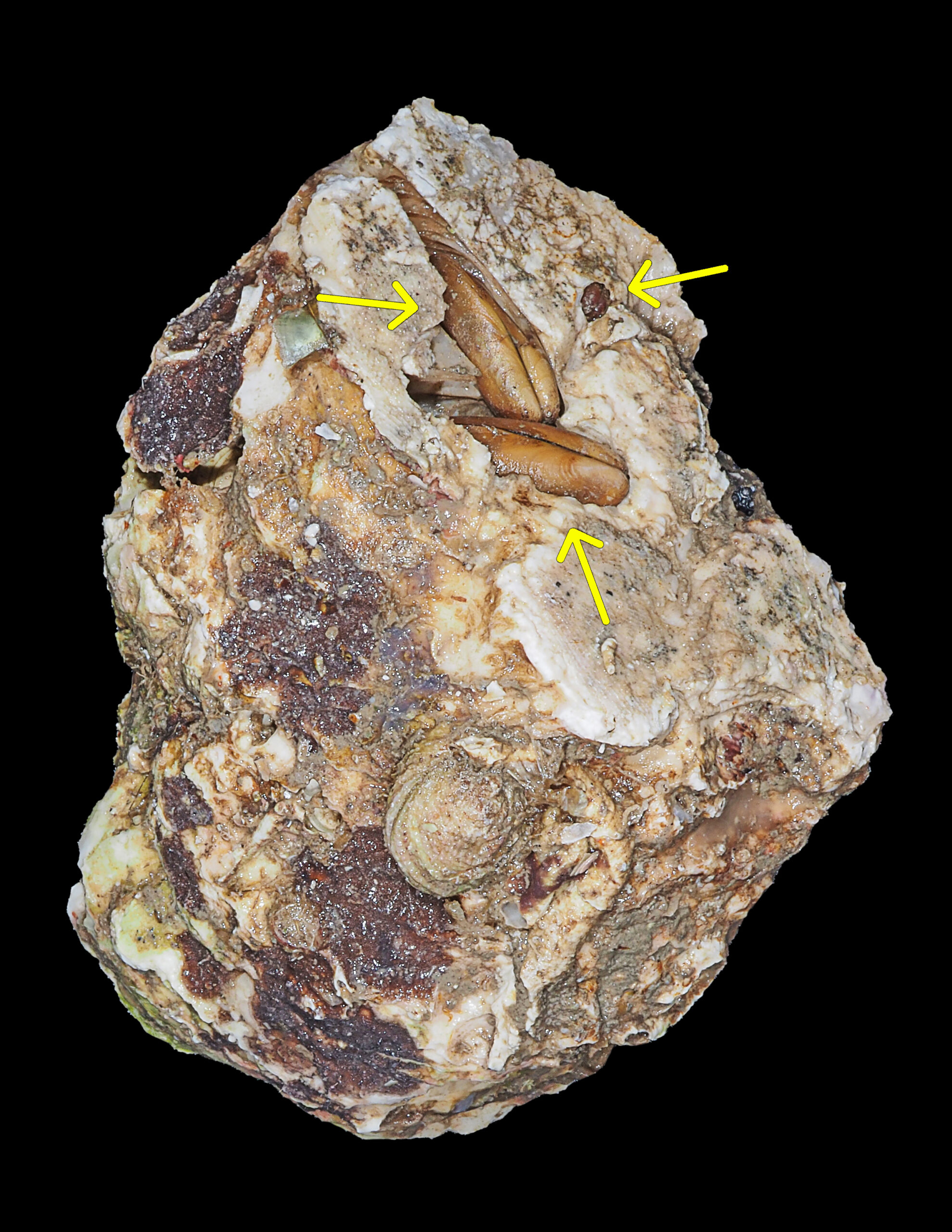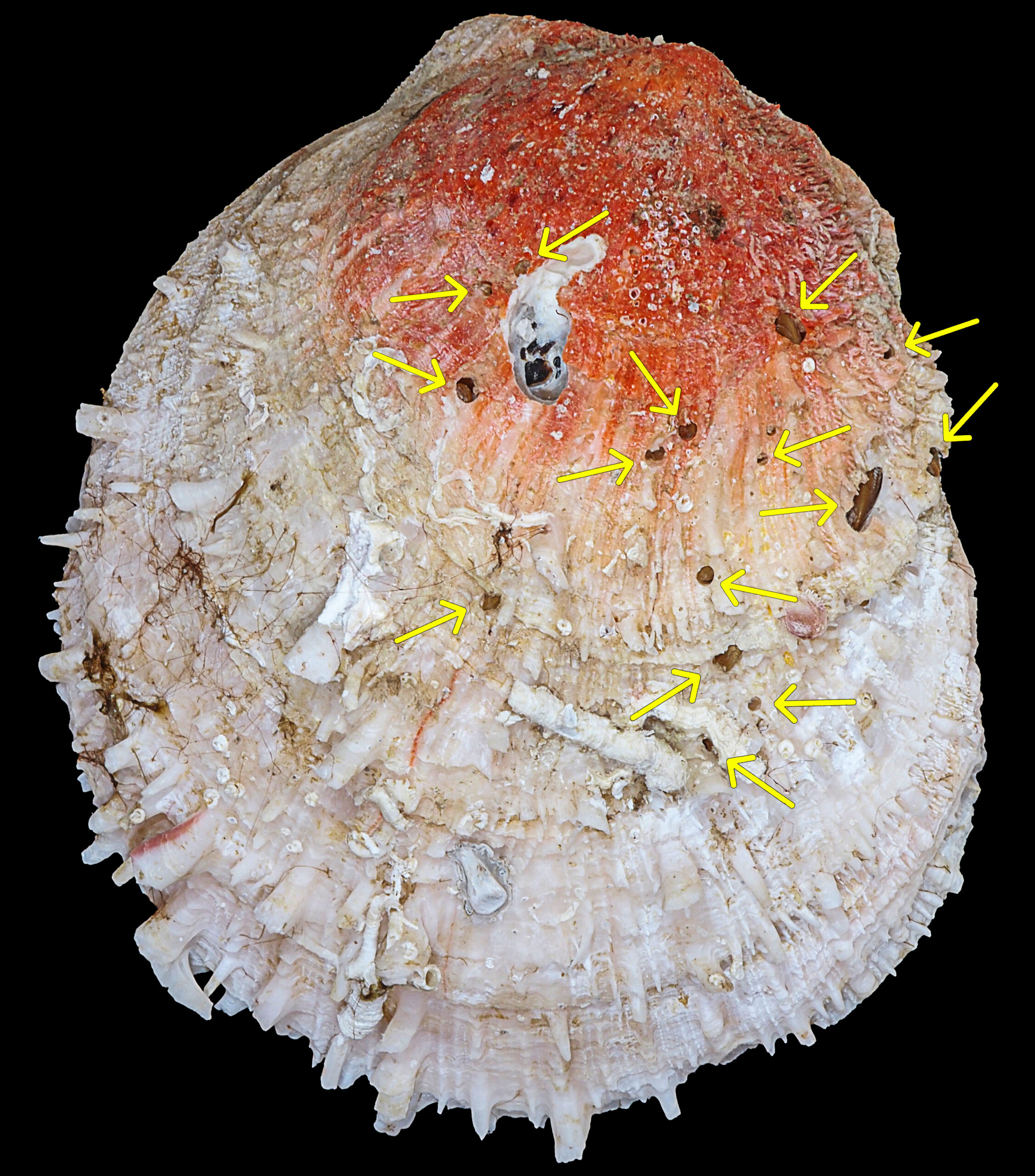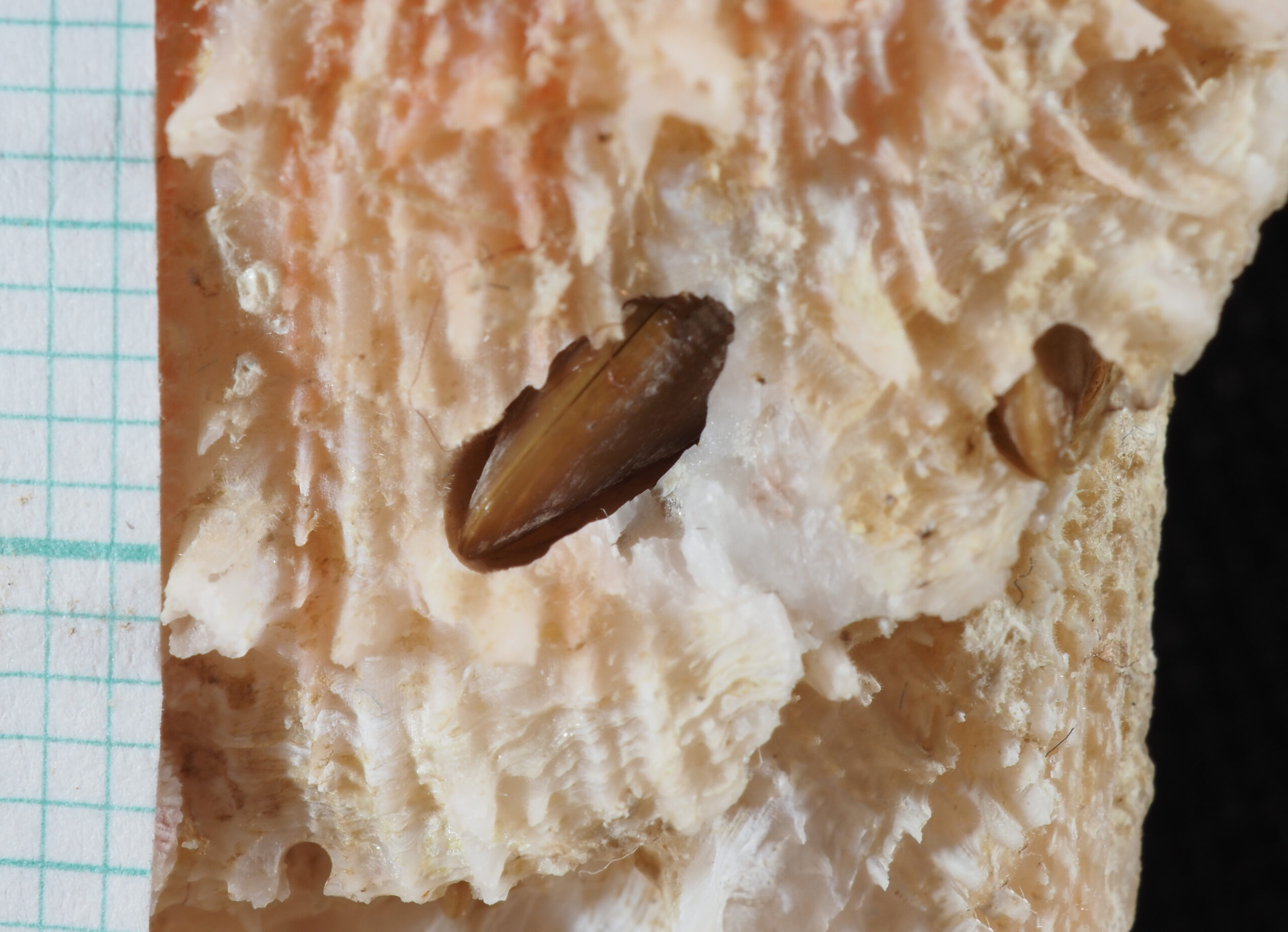
Date mussels (Lithophaga lithophaga) live inside calcareous rocks, where they create cavities through chemical bioerosion. It is therefore not surprising that they can also inhabit the shells of other bivalve species.
However, this phenomenon had not previously been scientifically documented, and we have now published a study on this subject in the latest issue of Acta Adriatica, a scientific journal published by our Institute.
We observed this interesting phenomenon during sampling conducted as part of the RIBAR project, funded by NextGenerationEU through the National Recovery and Resilience Plan 2021–2026. One of the project’s objectives is to investigate the growth and reproduction of commercially important bivalve species.
Date mussels were found within the shells of two bivalve species – the European flat oyster (Ostrea edulis) and the spiny oyster (Spondylus gaederopus). Their abundance and size varied depending on the host species. The spiny oyster has a considerably thicker and more robust shell than the European flat oyster, making it more difficult to bore into. Consequently, numerous but smaller date mussels (less than 1 cm) were found in its shells. The largest specimen, measuring 3 cm in length, was found inside an oyster shell, and its age was estimated at two to three years.
We also observed that the presence of date mussels affects shell formation in their hosts. Both oysters and spiny oysters produce additional shell layers to protect their soft tissues from penetration by date mussels. However, the extent to which the presence of date mussels affects the survival of these bivalves remains to be investigated.
This observation should be regarded solely as a contribution to our understanding of the biology of this protected species, and not as an alternative method for harvesting date mussels.
The harvesting of date mussels is prohibited for good reason, as the destruction of the rocks they inhabit causes severe damage to marine habitats.