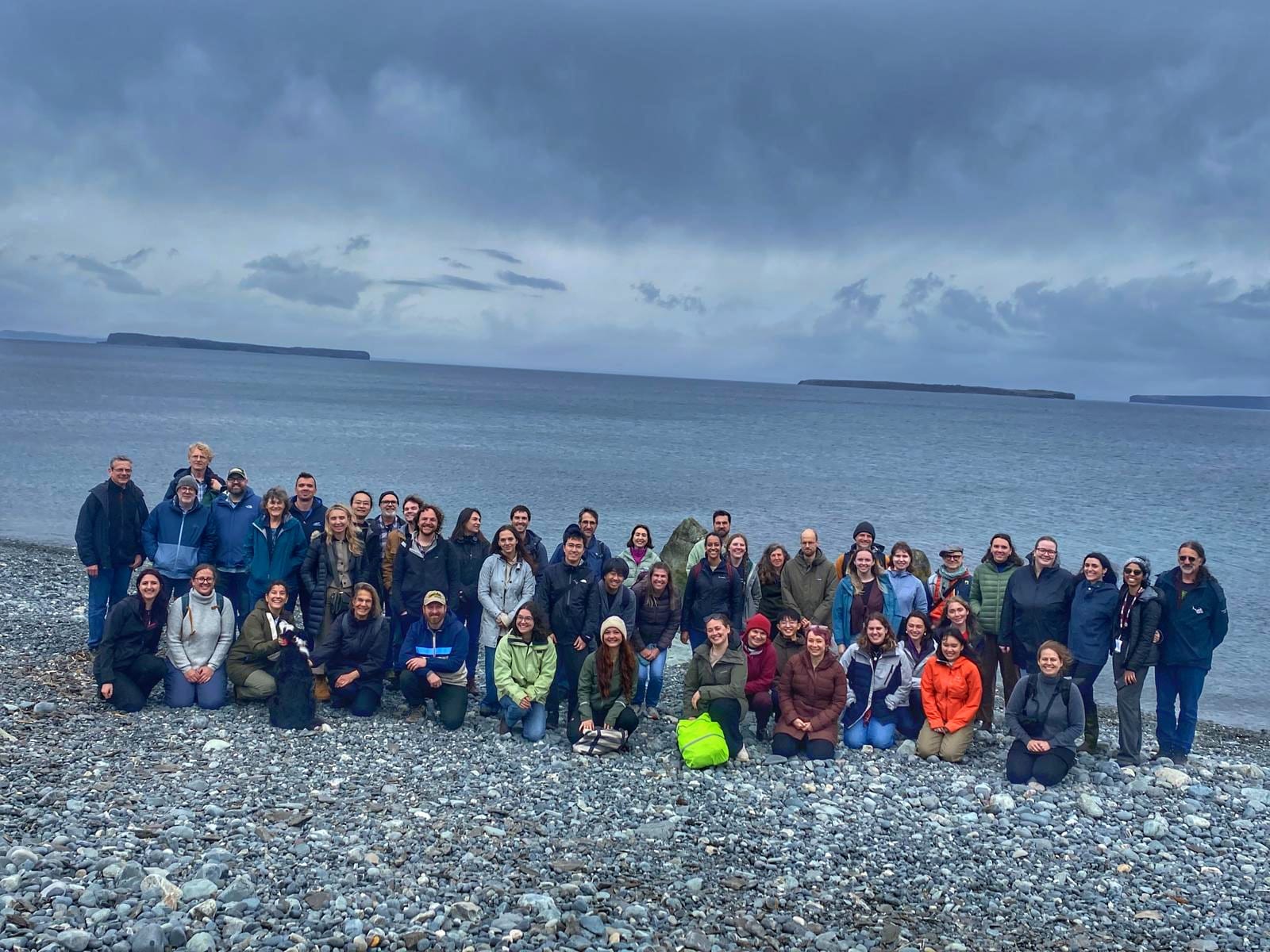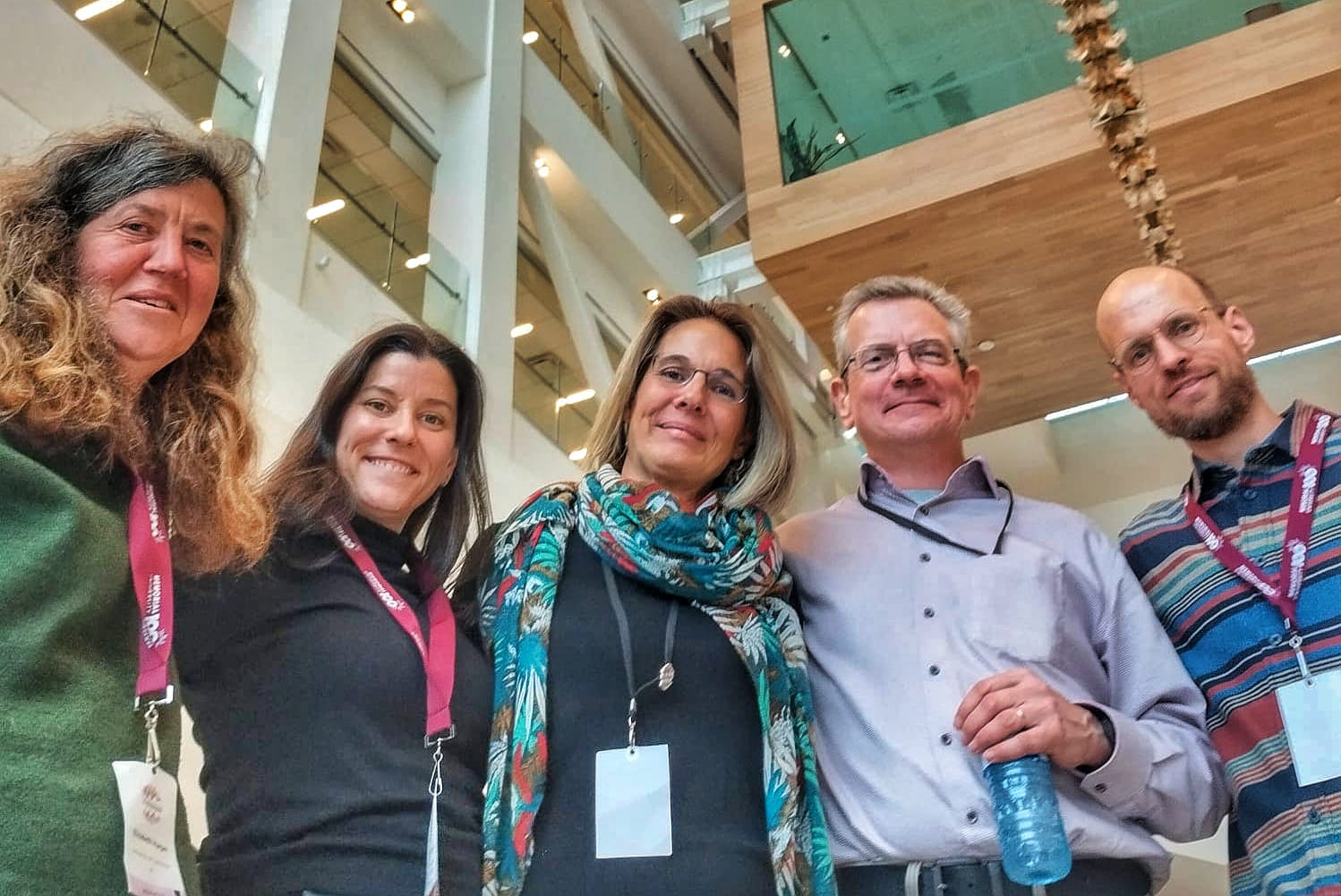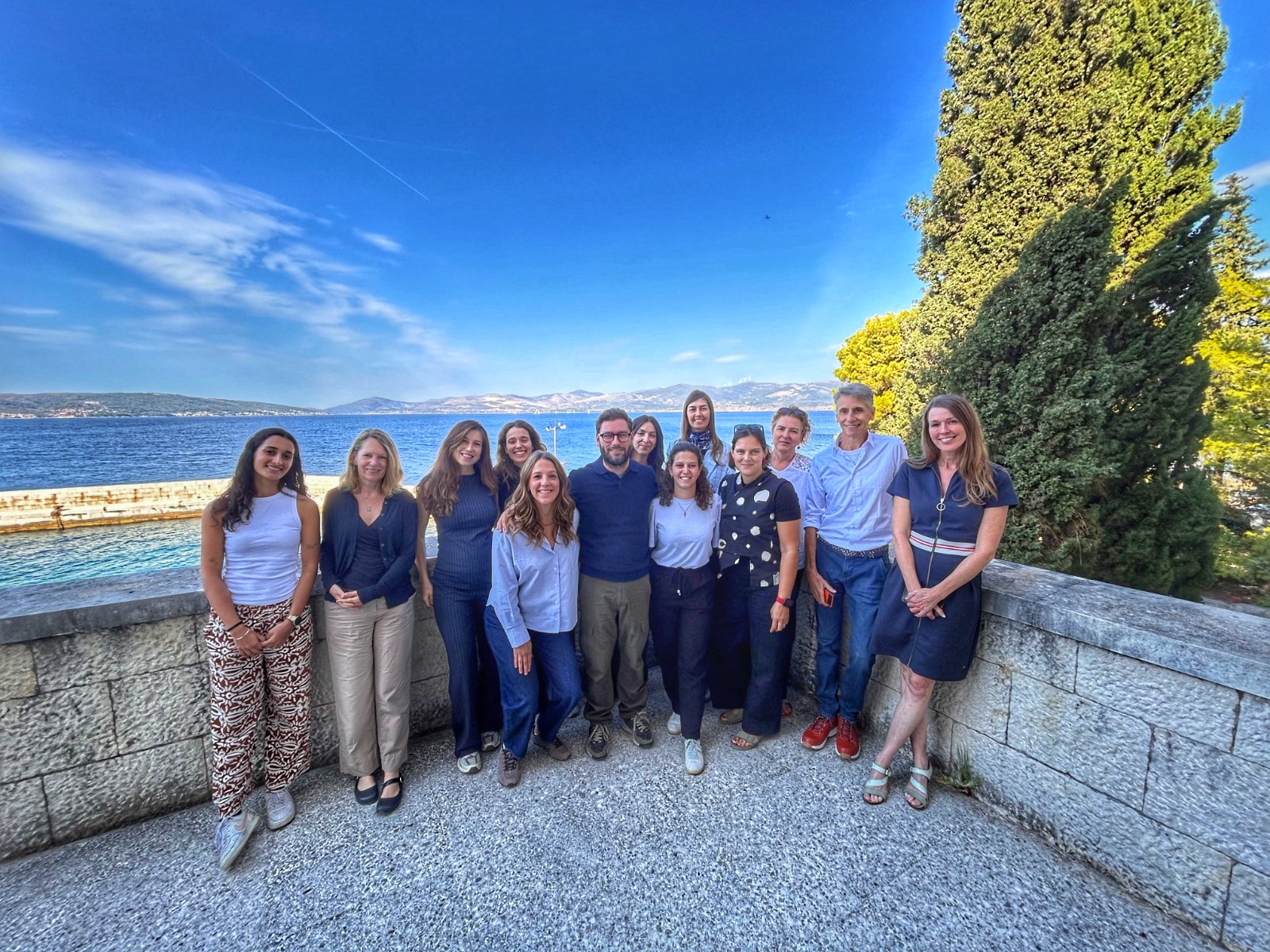
Experts from around the world gathered at the 7th International Sclerochronology Conference, held from 5 to 9 May 2026 at Memorial University of Newfoundland and Labrador, in the city of St. John’s, Canada.
This international scientific conference brings together researchers from different disciplines related to the study of hard structures in organisms, such as bivalve shells, corals and fish otoliths. The Institute of Oceanography and Fisheries hosted this conference in Split in 2019.
Scientists from the Institute of Oceanography and Fisheries presented projects and the latest research findings in the fields of ichthyology, fish ecology, sclerochronology and the reconstruction of environmental changes, which are currently being carried out at the Institute.
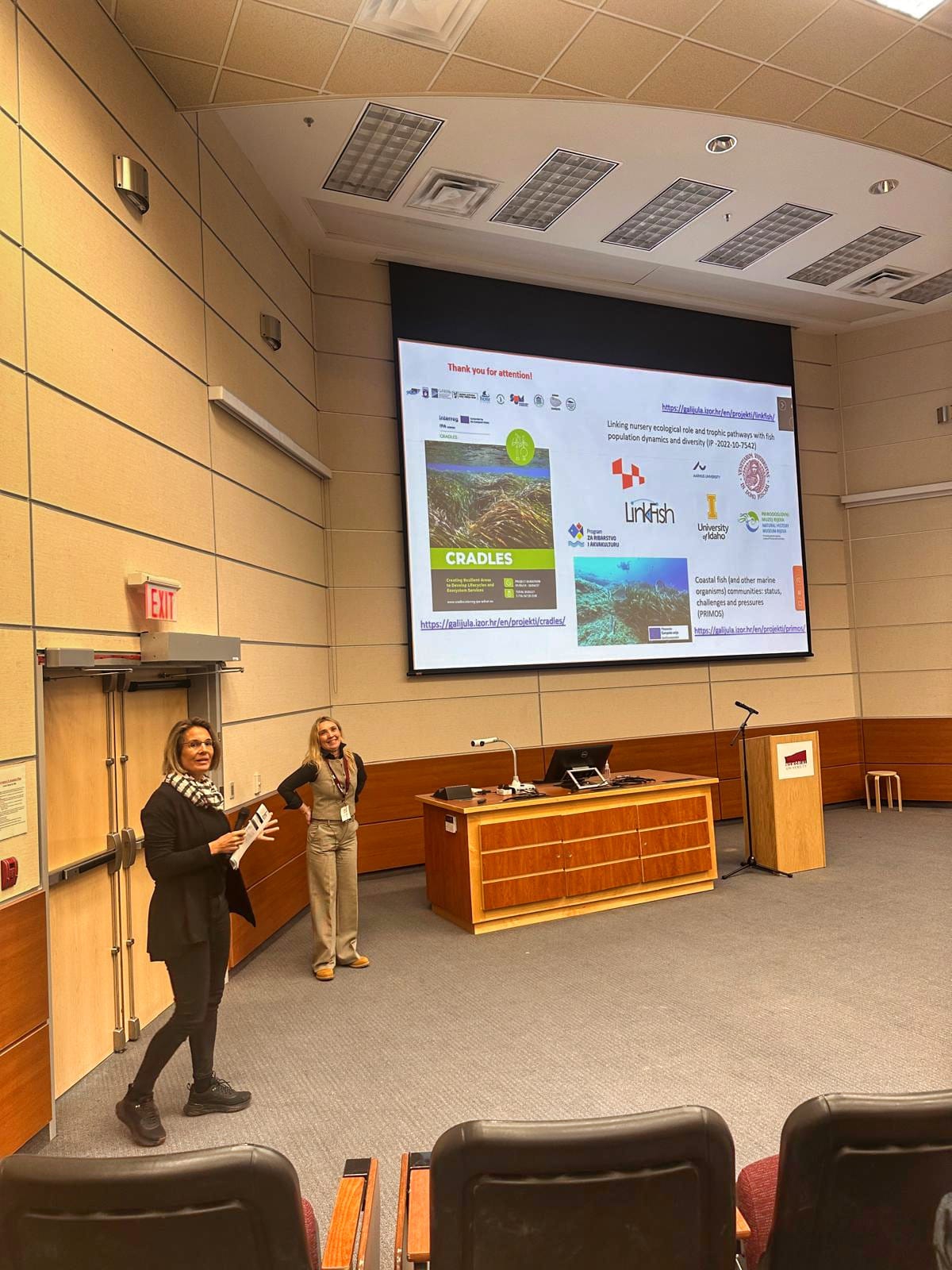
Dr. Sanja Matić-Skoko, principal investigator of the LinkFish project, Linking the ecological role of nursery habitats and trophic patterns with fish population dynamics and diversity, funded by the Croatian Science Foundation, and the PRIMOS project, Coastal communities of fish and other marine organisms: status, challenges and pressures, funded by the European Union through the NextGenerationEU programme, presented the latest results of research initiated within these projects.
In her oral presentation on the otolith microchemistry of European eels from different habitats in the Neretva Estuary, with an emphasis on how otoliths can reveal habitat variability associated with anthropogenic impacts, Dr. Matić-Skoko presented part of the contemporary research being conducted in the Laboratory of Ichthyology. This research is aimed at improving our understanding of fish life histories, habitat use and human impacts on coastal ecosystems.
Dr. Mišo Pavičić presented a poster on tracing the origin of adult gilthead seabream (Sparus aurata) to their juvenile nursery habitats using elemental “fingerprints” in otoliths. This approach enables a better understanding of the connectivity between nursery habitats and adult fish populations, which is important for the management of fish resources and the conservation of key coastal habitats.
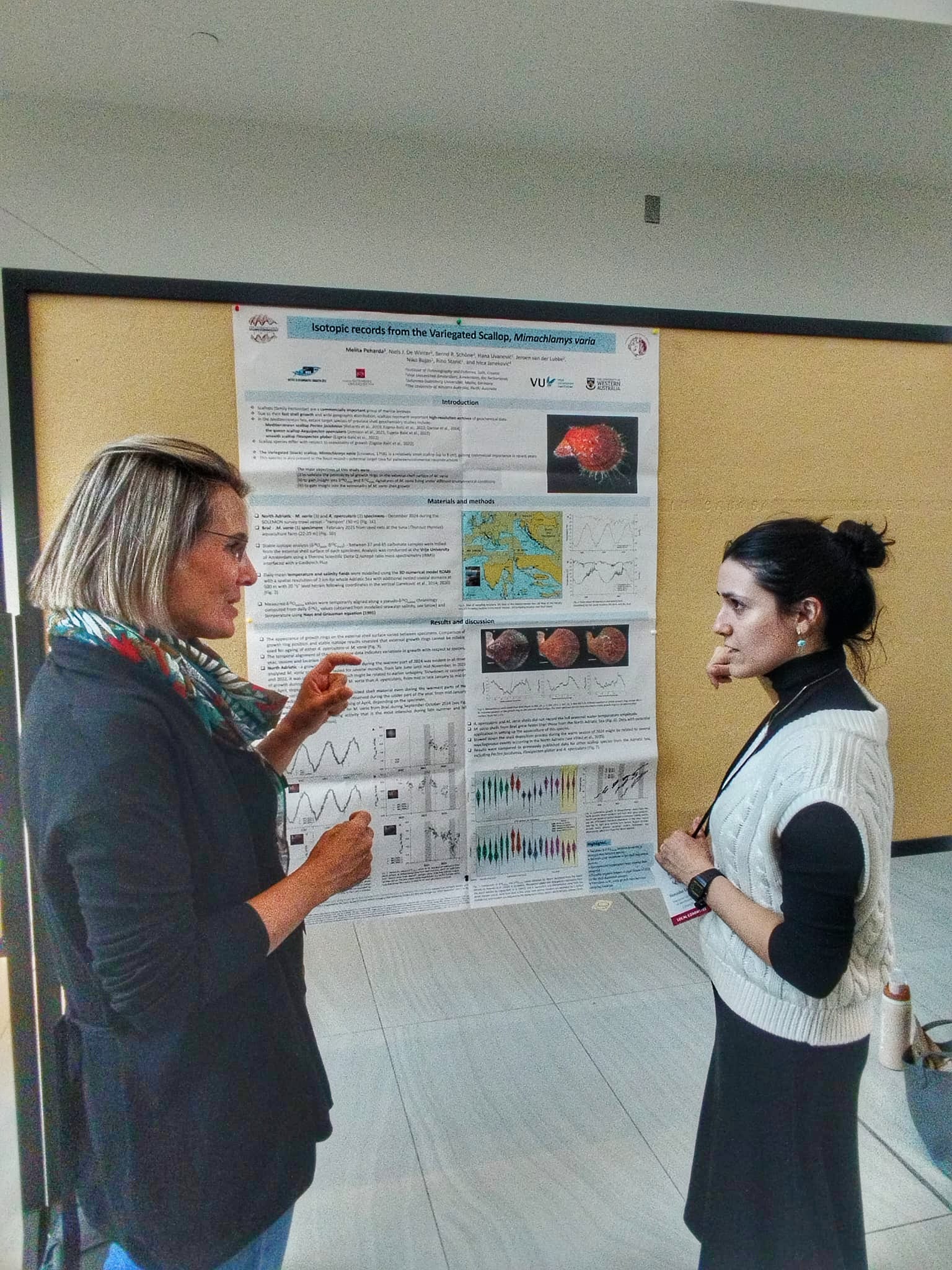
Dr. Melita Peharda, within the RIBAR project, funded through the National Recovery and Resilience Plan 2021–2026, presented a poster entitled “Isotopic records from the shells of the variegated scallop, Mimachlamys varia”. It is important to highlight that Dr. Peharda also served as a member of the conference Scientific Committee, joining an international group of experts who contribute to the scientific quality and direction of the conference. This represents an important recognition of her work and reputation within the scientific community.
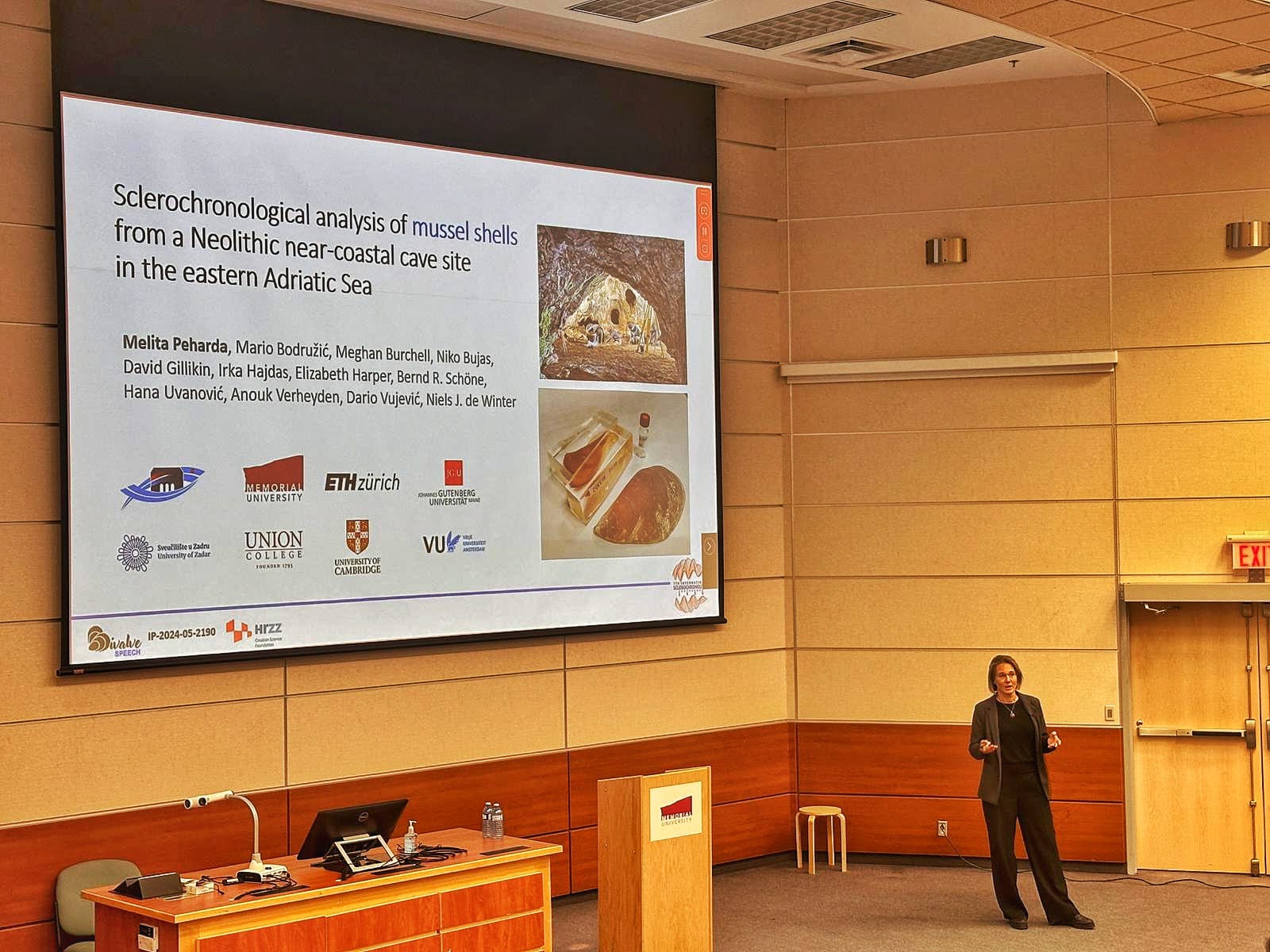
In addition, Dr. Peharda gave an oral presentation on analyses of mussels from the Neolithic site in Ždrilo Cave, research currently being conducted within the BivalveSPEECH project, funded by the Croatian Science Foundation. Through the analysis of stable oxygen and carbon isotopes, this project aims to contribute to a better understanding of the historical relationship between humans and the sea, long-term changes in marine ecosystems, and the sustainable management of shellfish aquaculture.