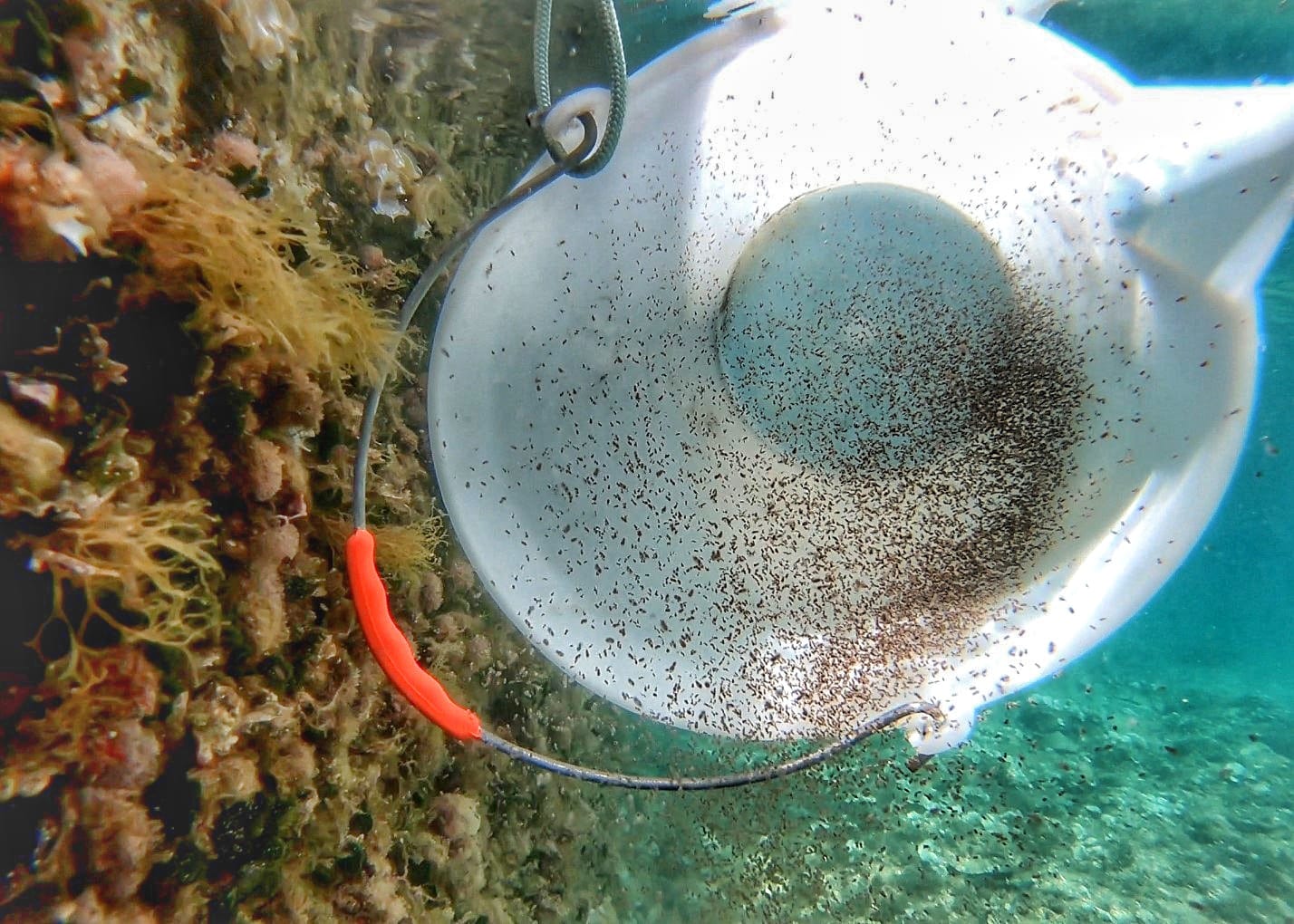
The release of octopus paralarvae into the sea, carried out over the past several years, attracted strong public interest and raised an important question: can the sea, while being used as a resource, also be actively restored?
Restocking and the strengthening of biological stocks refer to programs in which cultured individuals are released into their natural habitat with the aim of restoring or increasing populations weakened by overfishing, habitat degradation, or other negative impacts. Such programs have been implemented worldwide for decades, and numerous studies indicate that, when carefully designed and monitored, they can have measurable and positive effects.
With financial support from the Croatian Federation for Sport Sea Fishing, the Laboratory for Aquaculture of the Institute of Oceanography and Fisheries conducted, for the first time, a systematic investigation into the possibilities and limitations of this approach under Adriatic Sea conditions. It is important to emphasize that restocking does not represent a universal solution nor necessarily a new direction in fisheries management. The goal of this research was to obtain reliable scientific knowledge that could serve as a foundation for responsible and long-term management of marine resources.
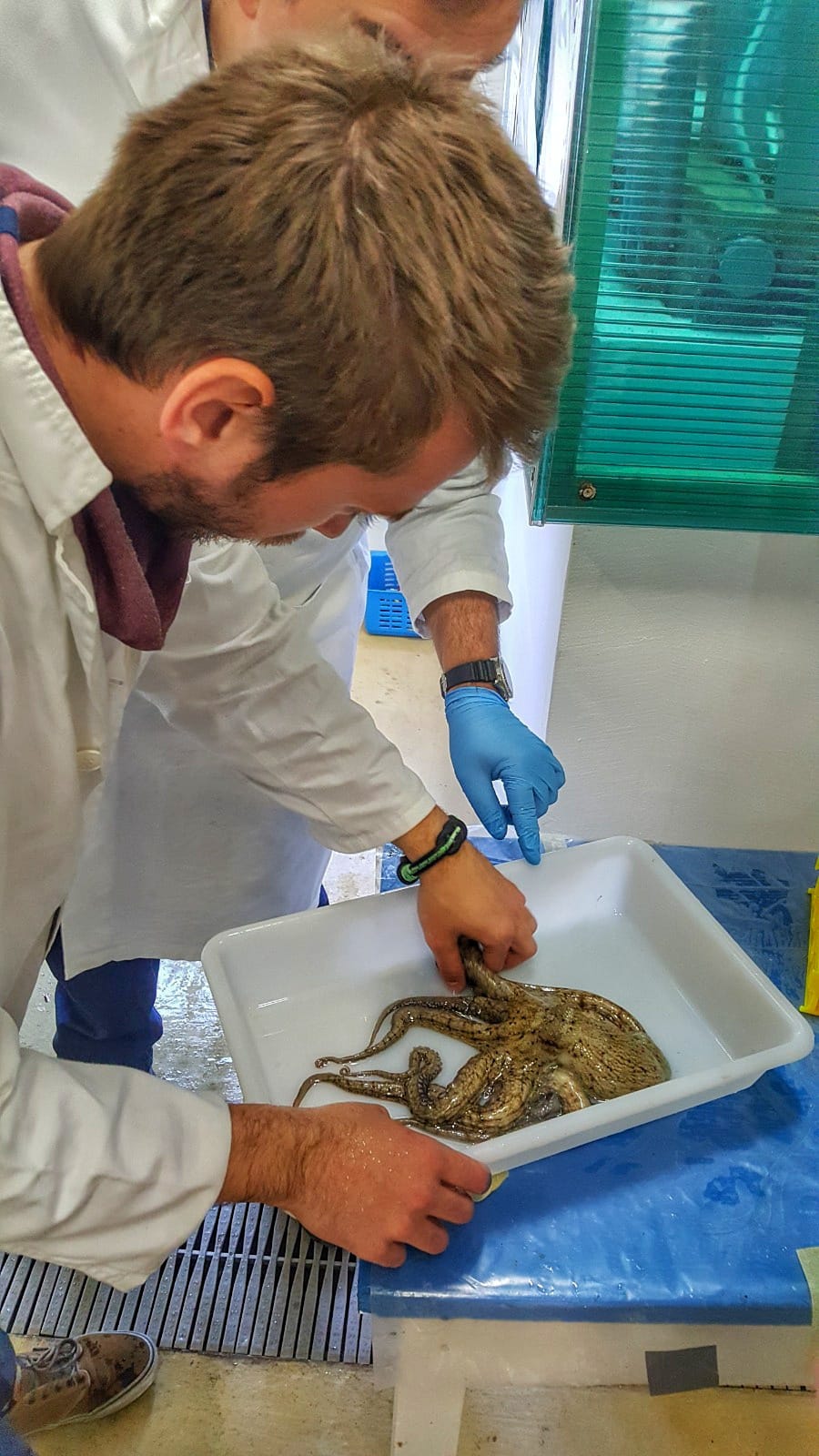
The research began with the collection of live octopus individuals, which were then maintained in controlled conditions within the experimental hatchery facilities of the Institute. During their time in captivity, their adaptation, growth, feeding, and reproduction were monitored. Following successful reproduction, females laid eggs under protected conditions, from which paralarvae hatched. In this most sensitive stage of development, the paralarvae were reared and fed live prey to increase their chances of survival.
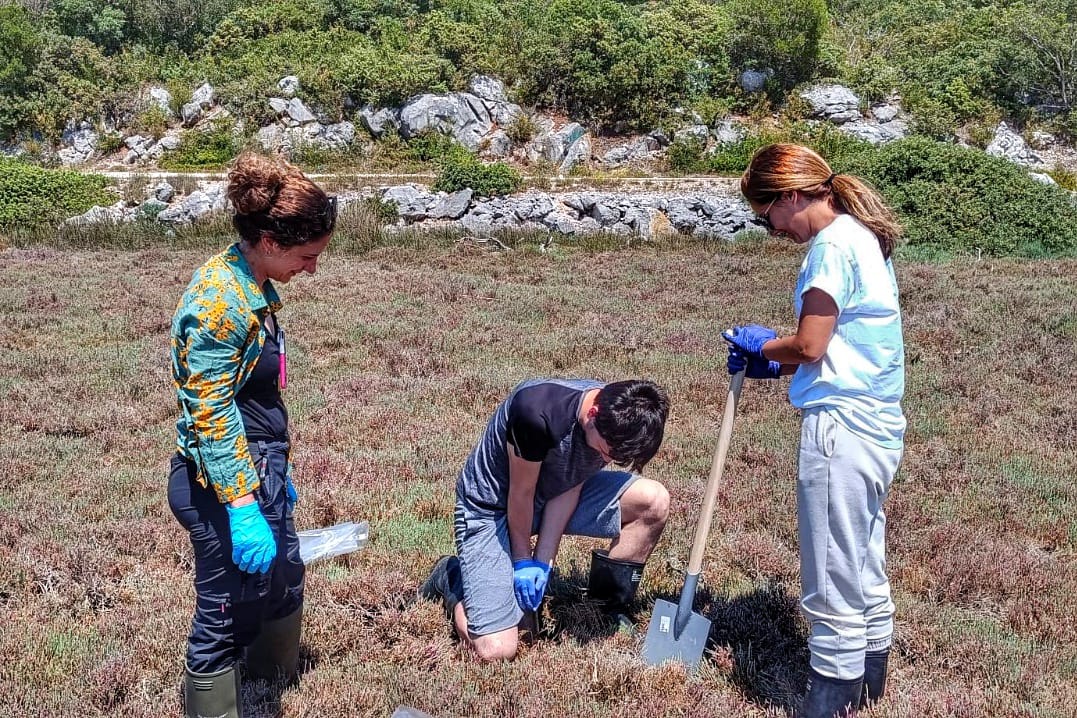
The paralarvae were subsequently released into the sea in the vicinity of the Institute. Their fate was monitored through field sampling and genetic analyses, including parentage testing, in order to determine whether individuals reared under controlled conditions could be reliably identified in the wild and to assess their survival potential. In addition to restocking itself, the research also addressed a key scientific question: can the life cycle of the octopus be fully closed under controlled conditions?
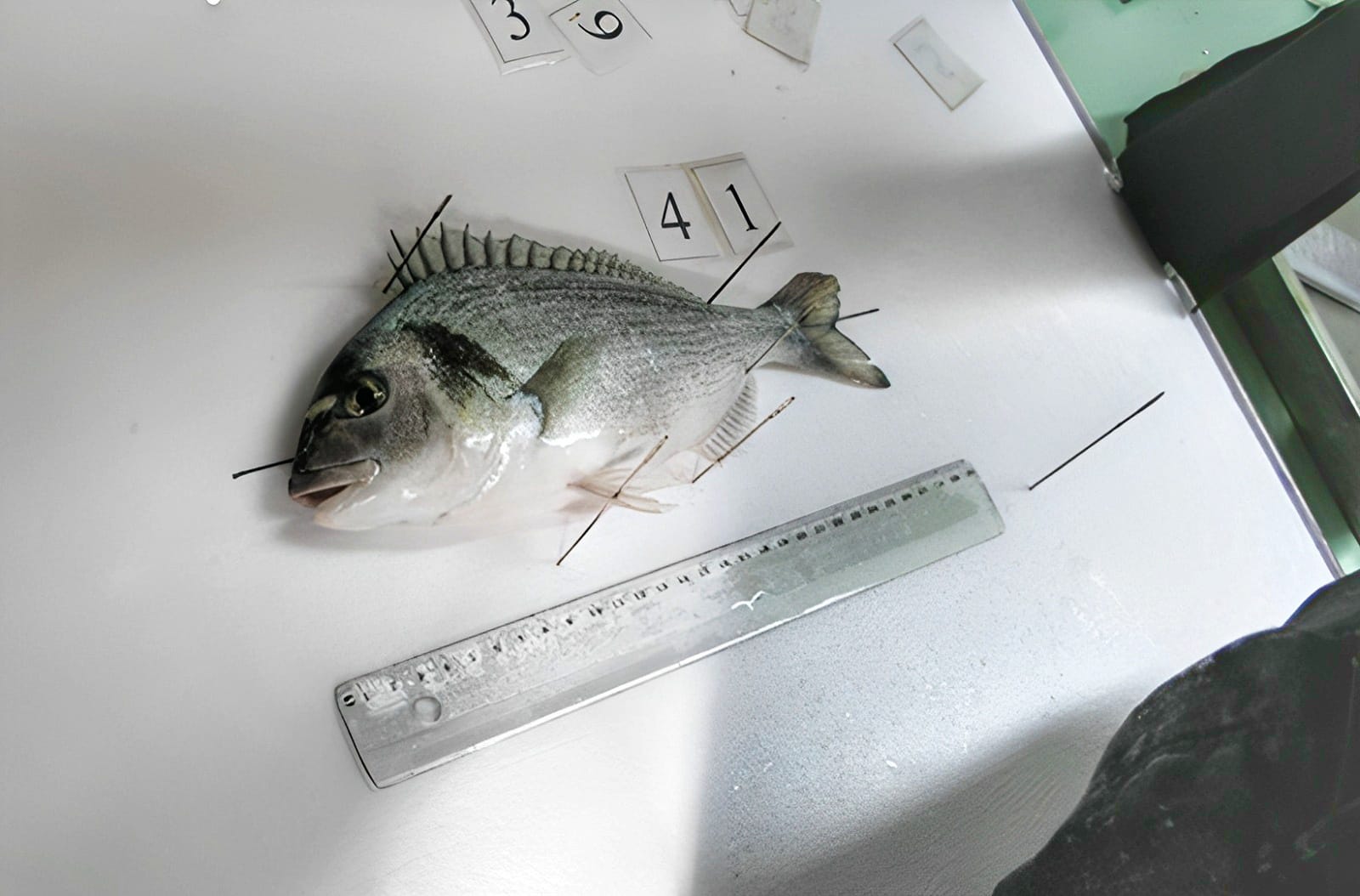
An important role in the research was played by sport fishermen from Split. Their cooperation enabled sampling across a wider area, significantly contributing to the scientific value of the results.
The results indicate that restocking of this type may contribute to improving the status of locally overexploited octopus populations. At the same time, these findings provide the first scientifically grounded insights of this kind in the Adriatic Sea and represent a starting point for further research and the development of proactive measures for the restoration of marine resources.
A detailed report on the research and its results is available on the website of the Croatian Federation for Sport Sea Fishing.