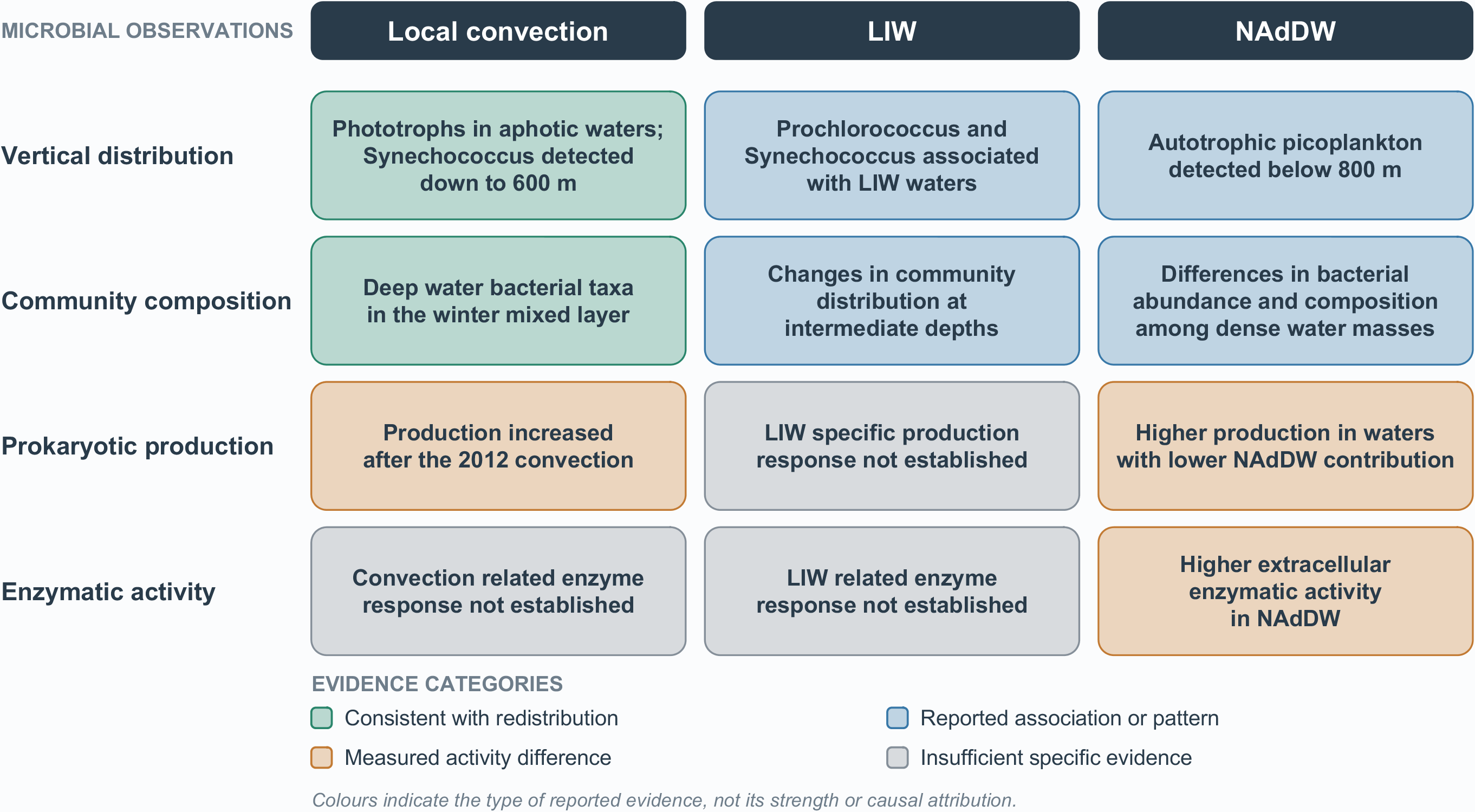
Previous research has shown that photosynthetic cyanobacteria of the genus Synechococcus have been found in the southern Adriatic at depths where there is insufficient light for photosynthesis, while bacterial groups characteristic of deep waters have been found closer to the surface. These findings suggest that winter convection can change the distribution of microorganisms in the sea.
Two scientists from our Institute, Dr Stefanija Šestanović from the Laboratory of Microbiology and Dr Natalija Dunić from the Laboratory of Physical Oceanography, combined expertise from two scientific disciplines. In a review published in the journal Microorganisms, they brought together existing scientific knowledge, highlighted possible causes of microbial distribution patterns in the southern Adriatic, and provided clear directions for future research.
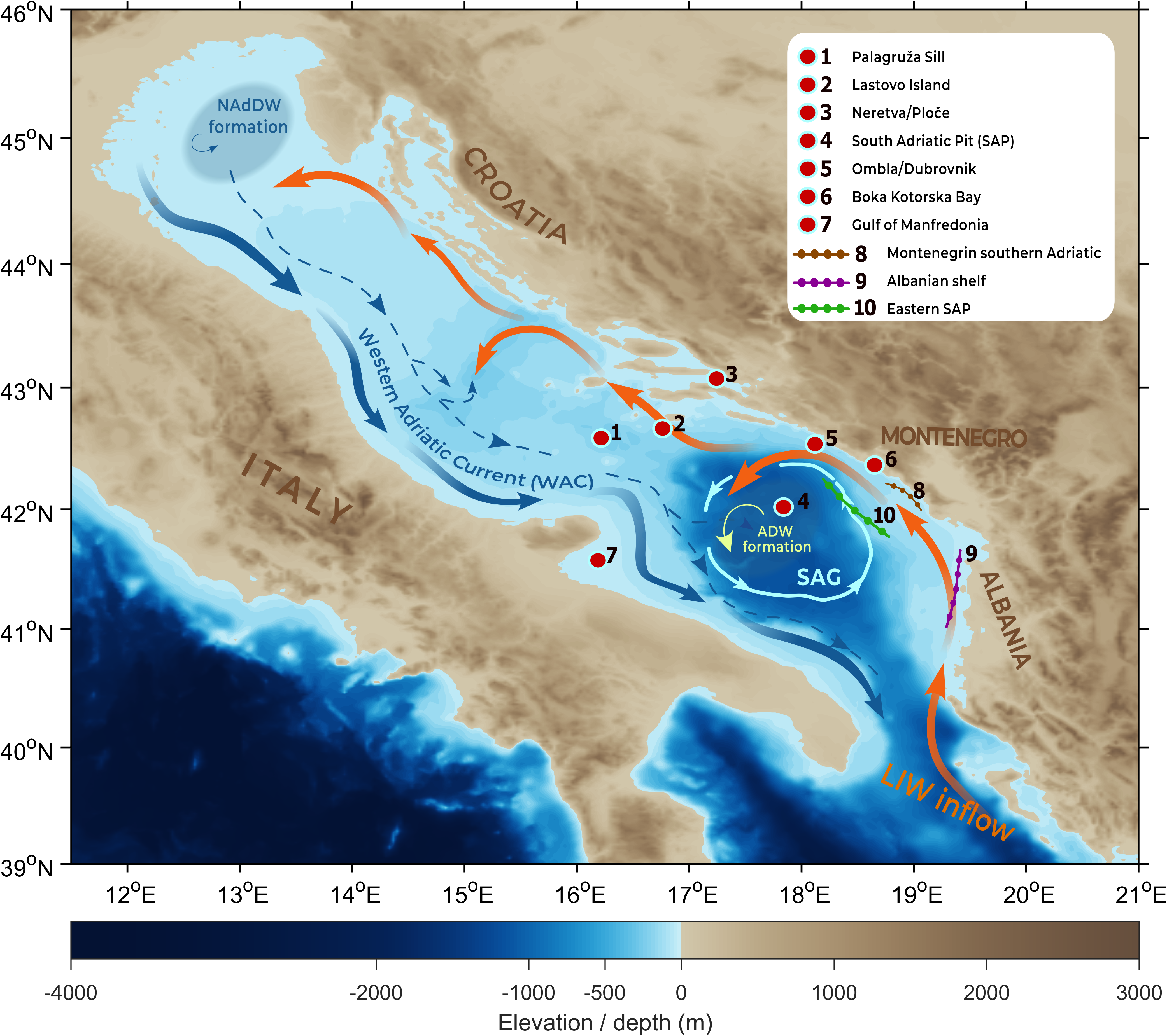
The distribution of microorganisms in the sea depends to a considerable extent on water mass movement and mixing. In winter, strong cooling increases the density of surface waters, causing them to sink and promoting mixing between surface and deeper layers.
However, microbial distribution in the southern Adriatic is also influenced by saltier waters from the eastern Mediterranean and cold, dense waters that form in the northern Adriatic and move southward. Differences in microbial community composition and in the activity of enzymes that break down organic matter have been recorded among water masses of different origins.
Measurements to date have generally been unable to reliably distinguish the effects of microbial cell transport from microbial responses to changing environmental conditions. By bringing together key findings, our scientists have paved the way for a better understanding of the relationship between water movement and microorganisms in the depths of the Adriatic.