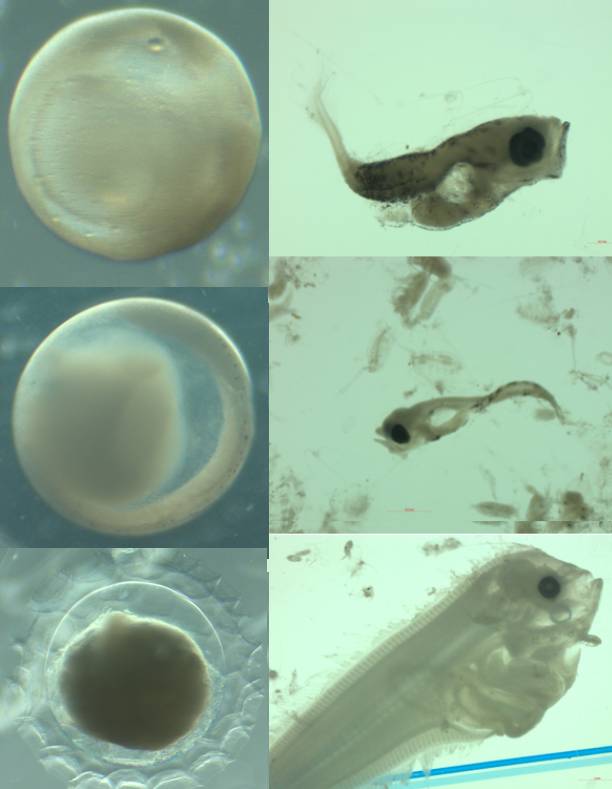
Fish eggs and larvae, collectively known as ichthyoplankton, are an important part of marine life. They develop into new generations of fish and also provide food for other fish. Their survival depends strongly on environmental conditions, and many die before reaching adulthood. Their presence and abundance therefore help scientists track changes in the sea, understand what influences adult fish abundance, and identify where fish spawn and develop.
Scientists from the Laboratory of Fisheries Biology at the Institute of Oceanography and Fisheries, in collaboration with other laboratories, investigated how combining DNA barcoding with conventional microscopic examination of ichthyoplankton can improve our understanding of the Adriatic. Their findings were published in the international scientific journal Fishes. The ESAmar project is funded by the Croatian Science Foundation.
Ichthyoplankton studies covering broader areas of the Adriatic remain scarce, and identifying species at these early developmental stages is challenging. Eggs and larvae are small and delicate, and their appearance changes as they develop. Identifying them requires considerable expertise, effort, and time, so scientists are increasingly using DNA barcoding. This method identifies species by comparing a short section of their DNA with sequences in reference databases.
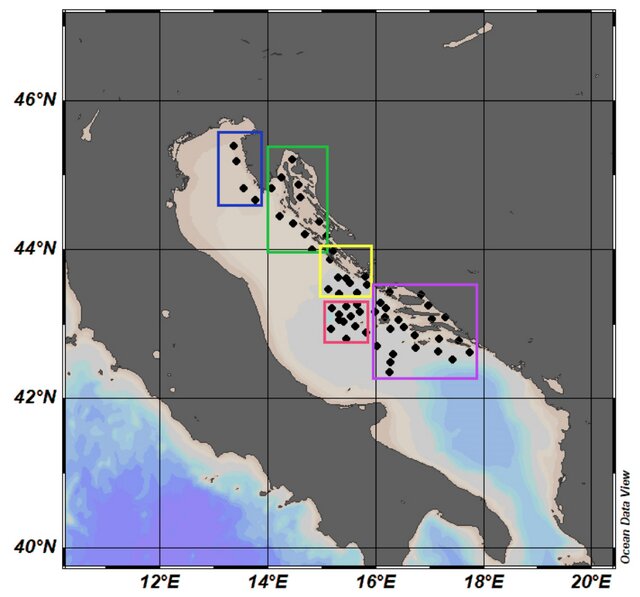
During the summers of 2019 and 2020, 118 samples were collected for ichthyoplankton analysis across five areas of the eastern Adriatic. Fish eggs and larvae were separated from the samples and counted, and species were identified through morphological examination and DNA analysis. Their abundance and composition were then compared with seawater temperature, salinity, and chlorophyll concentrations.
The scientists identified 34 fish species in the samples. Species composition was very similar across the two summers, with anchovy strongly dominating and accounting for more than 80% of all collected eggs and larvae.
Some fish groups were associated with warmer waters, while others were associated with higher chlorophyll concentrations, an indicator of phytoplankton abundance. However, the measured environmental conditions explained only about a quarter of the variation in assemblage composition. Other factors therefore need to be investigated to gain a fuller understanding of ichthyoplankton distribution.
During both summers, higher abundances of eggs and larvae were recorded in Kvarner and Kvarnerić, around the Jabuka Pit, and in southern Dalmatia. These findings further support the importance of these areas for fish spawning and early development.
Long-term monitoring that combines microscopic examination with DNA barcoding can improve our understanding of changes in the Adriatic and support decisions on marine conservation and fisheries management. Protecting the areas where fish begin their lives is important for the future of fish populations and for the people whose livelihoods depend on them.