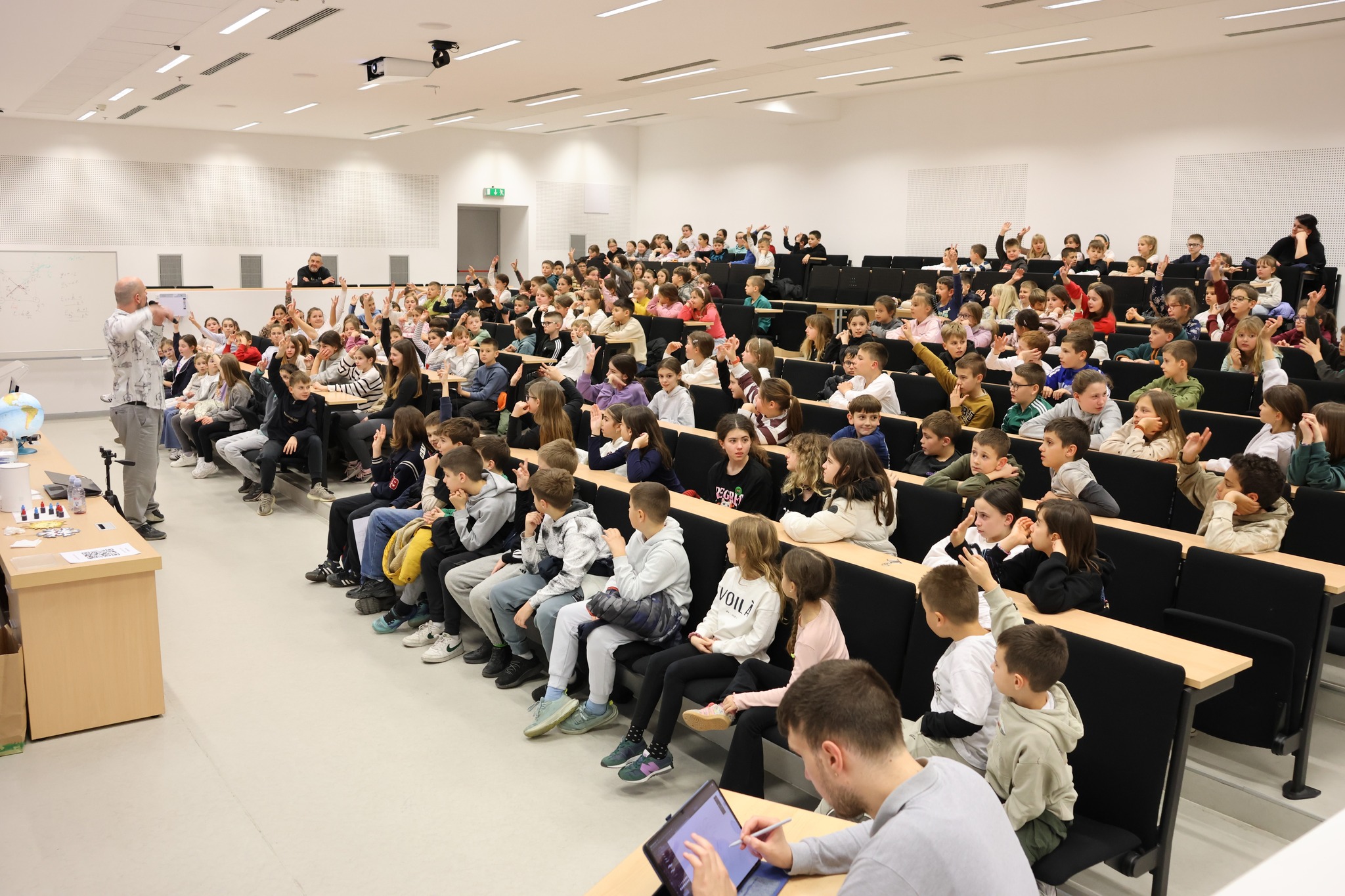
Science does not begin in the laboratory – it begins with the question “why?”. This very question was at the heart of the third edition of the Children’s University, where young participants had the opportunity to explore the sea in a different, more engaging way.
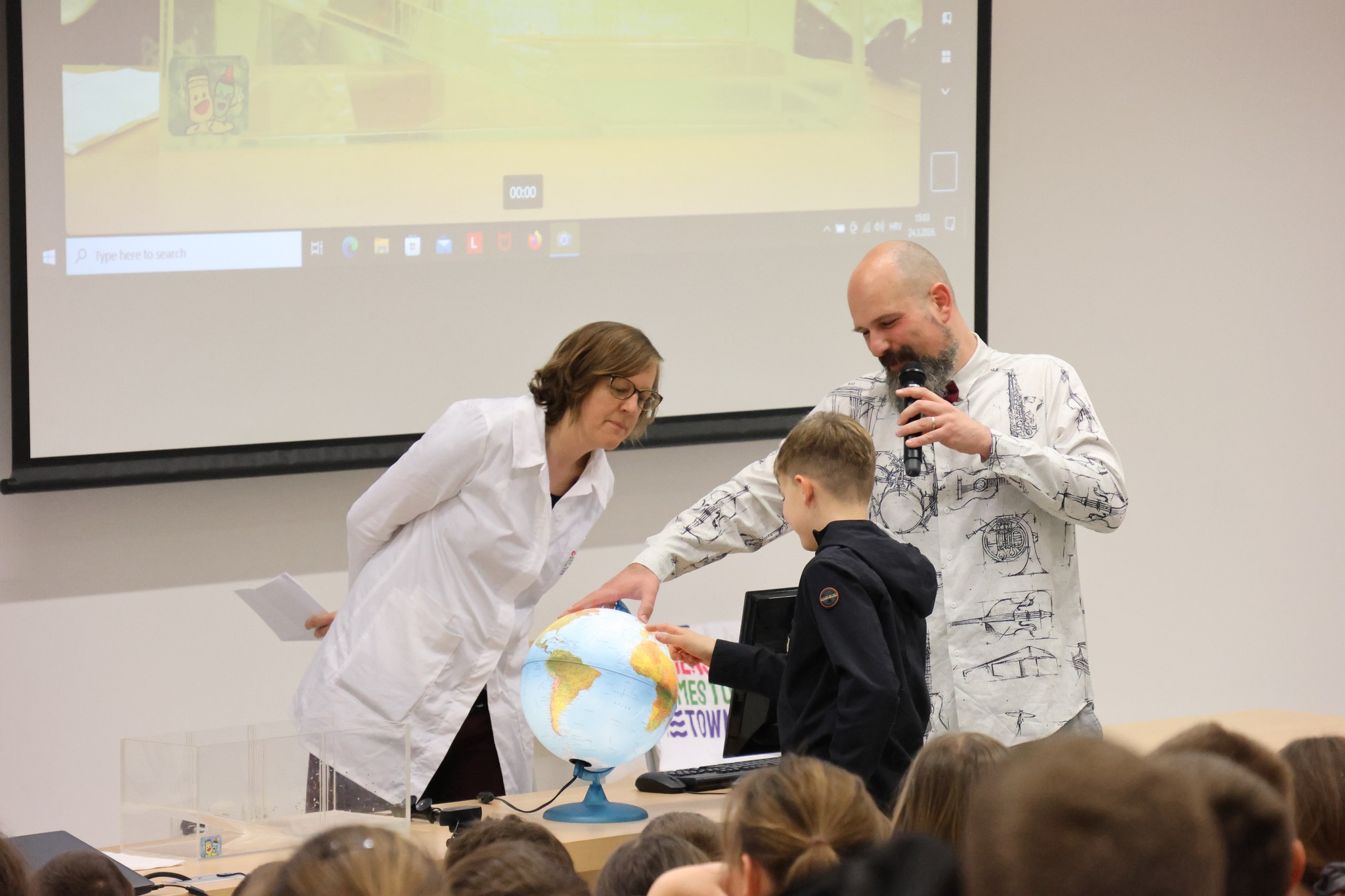
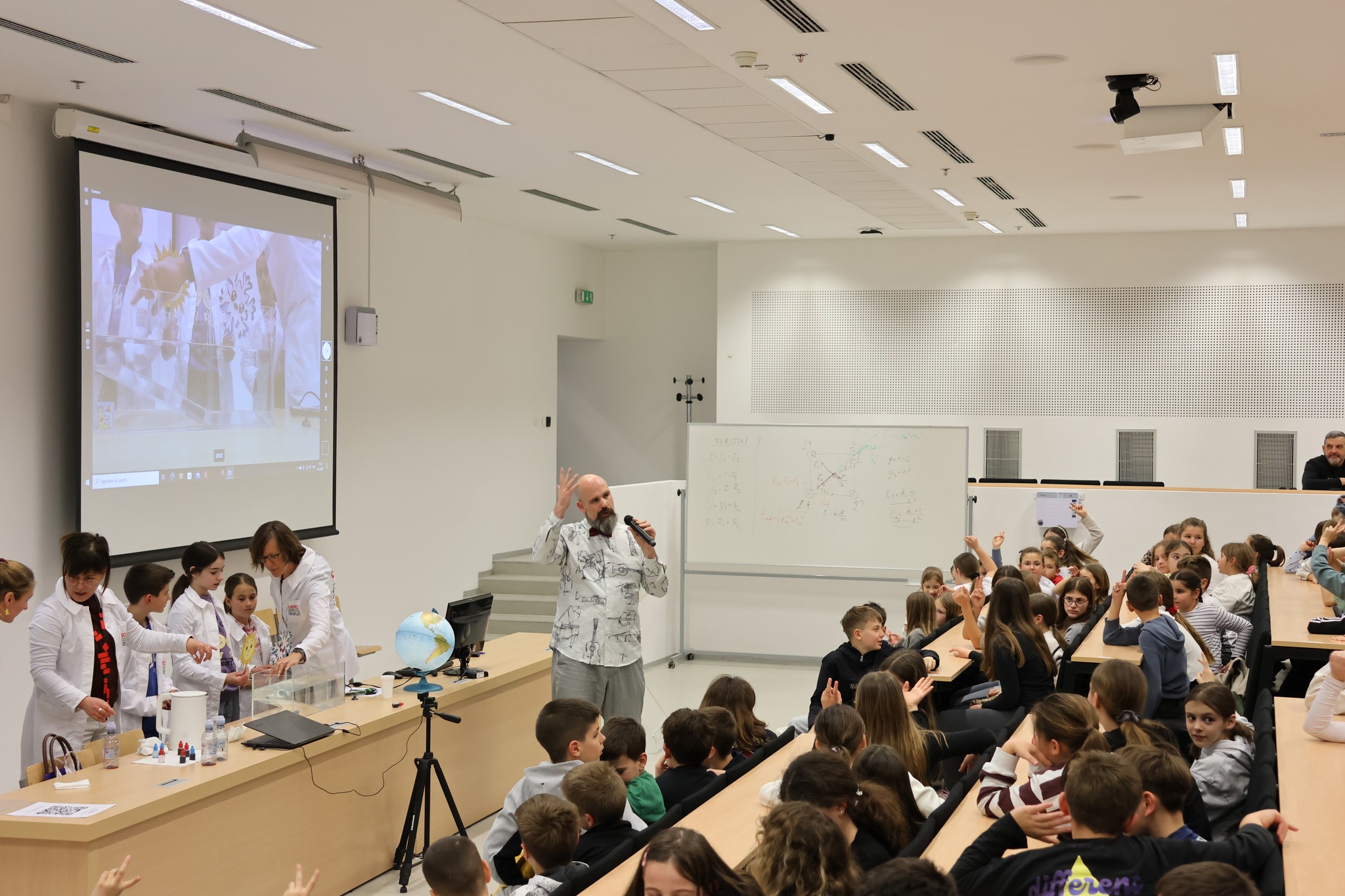
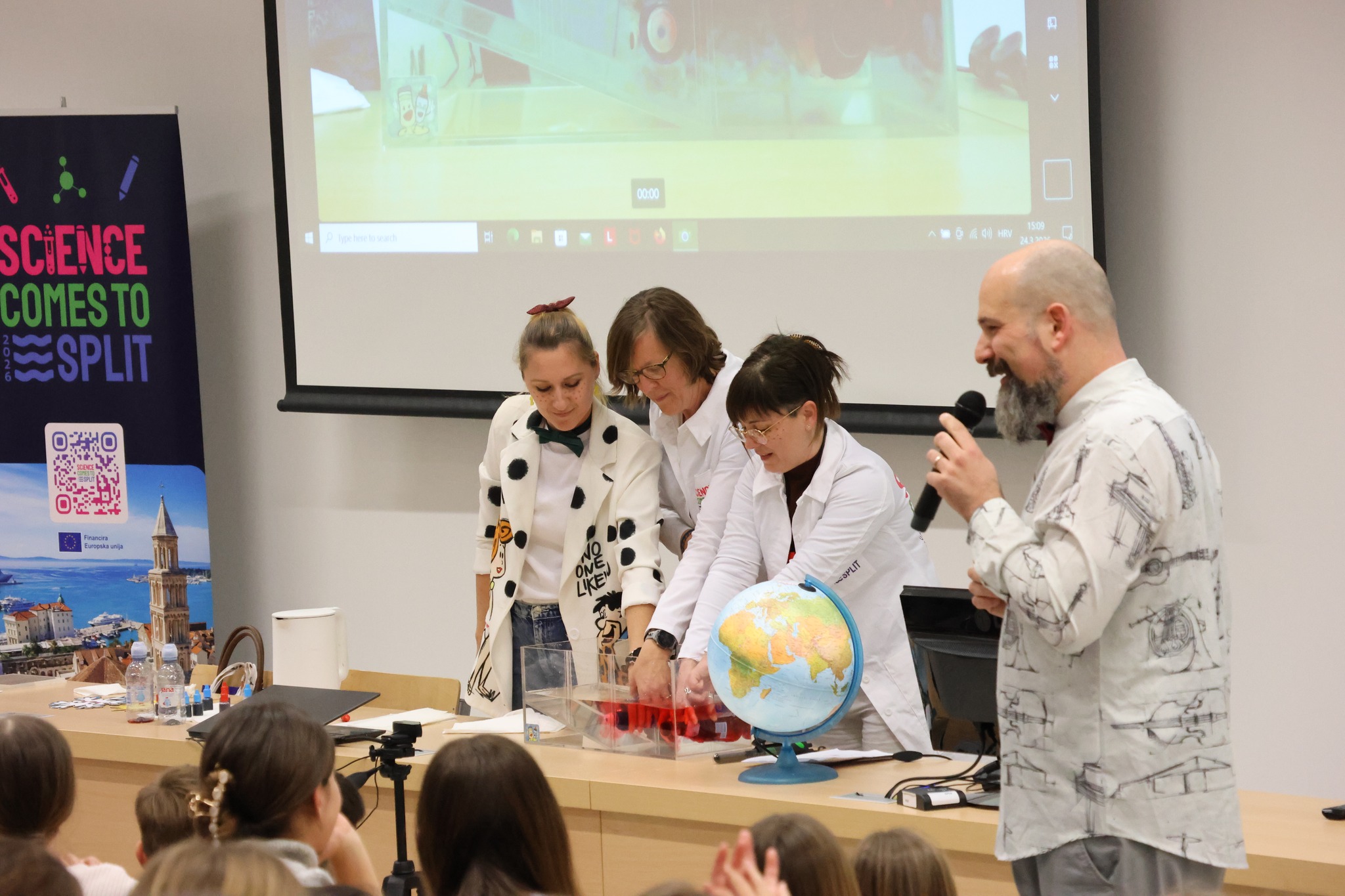
More than 200 primary school students took part in the lecture “From Pole to Equator: the journey of a drop of seawater”, where they learned about the oceans, ocean currents, and their key role in shaping the climate of our planet. Through experiments, storytelling and questions, the children explored how the ocean transports heat and salt, how it influences marine life, as well as weather and climate processes.
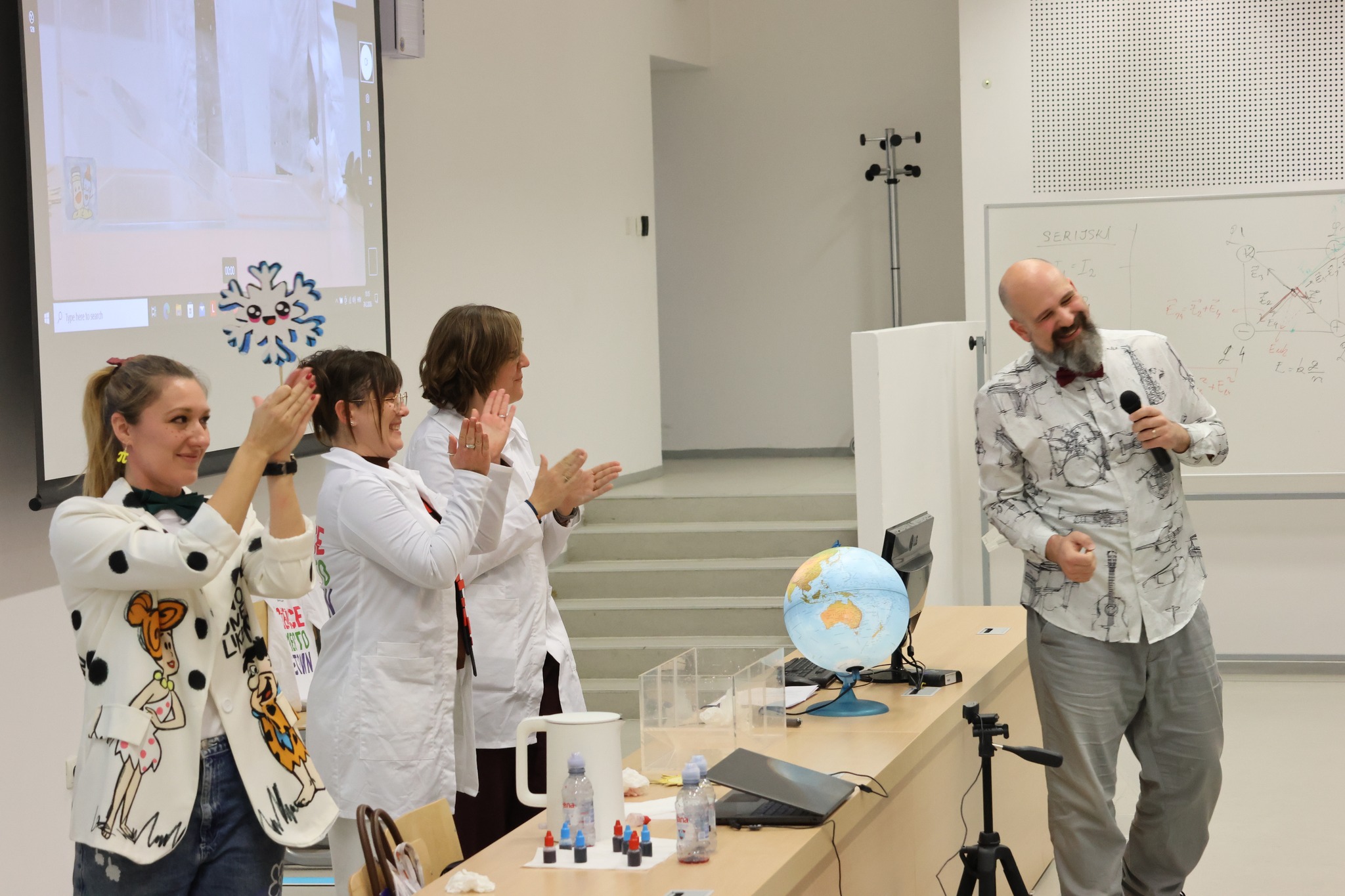
The lecture was delivered by Marin Vojković, PhD, Natalija Dunić, PhD from the Institute of Oceanography and Fisheries, Suzana Antunović, PhD, and Jadranka Šepić, Associate Professor.
As the lecturers highlighted:
“Yesterday, at the Faculty of Science, we talked about the sea – but not in the way we usually do in lectures or scientific papers. We told a story, asked questions and carried out experiments. Together, we explored how the ocean moves, how it transports heat and salt, how it shapes living systems, as well as weather and climate, and why the Atlantic Ocean is such an important part of that system.”
This approach once again demonstrated how important it is to bring science closer to the youngest audiences in a way that encourages curiosity and understanding. The Institute’s researchers regularly take part in such activities, gladly dedicating their time to make scientific knowledge accessible and engaging for future generations.
The Children’s University programme will continue in October 2026 with its fourth edition, as part of the Science Comes to Town project.