Our scientists, in collaboration with colleagues from the United Kingdom, have for the first time reconstructed the history of microplastic deposition in saltmarshes along the Croatian sector of the Adriatic Sea by analysing sediment layers through time.
Microplastics are plastic particles smaller than 5 mm that originate from the fragmentation of larger plastic items or from sources such as synthetic textiles, industrial activities and fisheries. Due to their persistence, they are now present in virtually all marine environments worldwide and progressively accumulate in marine sediments, where they may influence ecosystem functioning.
Saltmarshes are natural sediment and pollutant sinks and can function as long-term archives of plastic contamination. In the Mediterranean, and particularly in the Adriatic Sea, these ecosystems have remained largely understudied, despite evidence that plastics can become permanently incorporated into sediments alongside “blue carbon”, thereby forming part of the long-term stratigraphic record of human impact on coastal systems.
Researchers from the Institute of Oceanography and Fisheries (Split), in collaboration with the School of Biological and Environmental Sciences, Liverpool John Moores University, within the framework of the PRIMOS and KLIMPRON projects (EU NextGenerationEU) and with additional support from the ERASMUS+ and Turing programmes, investigated the abundance, type, age and depositional conditions of microplastics, as well as their relationship with sedimentary organic matter and grain-size characteristics. The results were published in the international peer-reviewed open-access journal Microplastics.
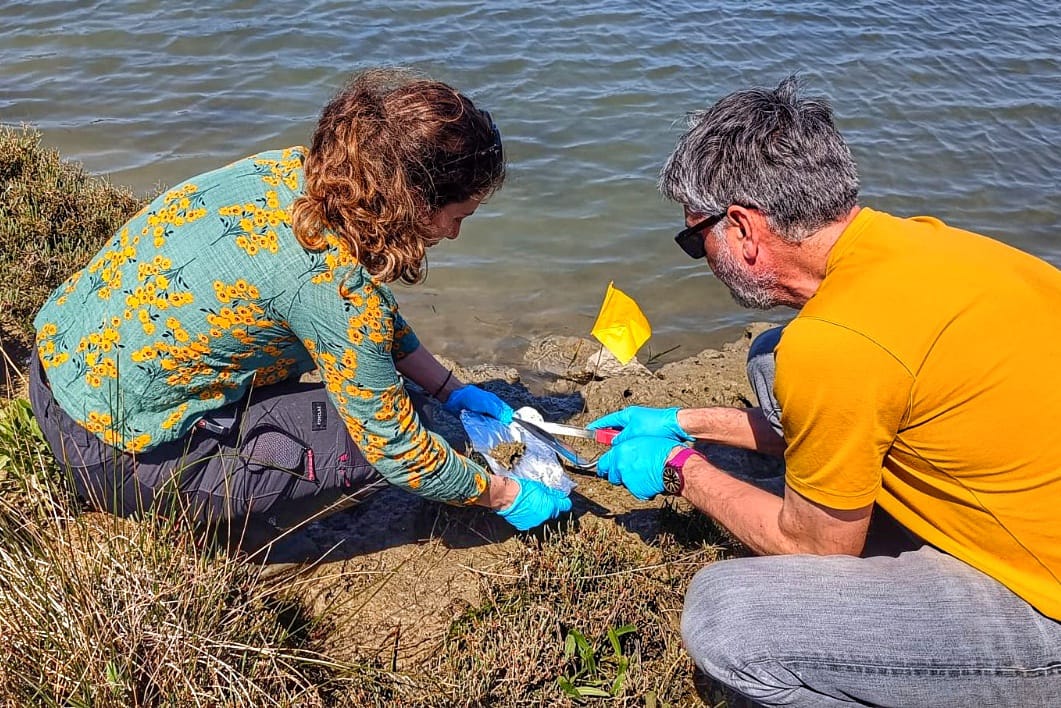
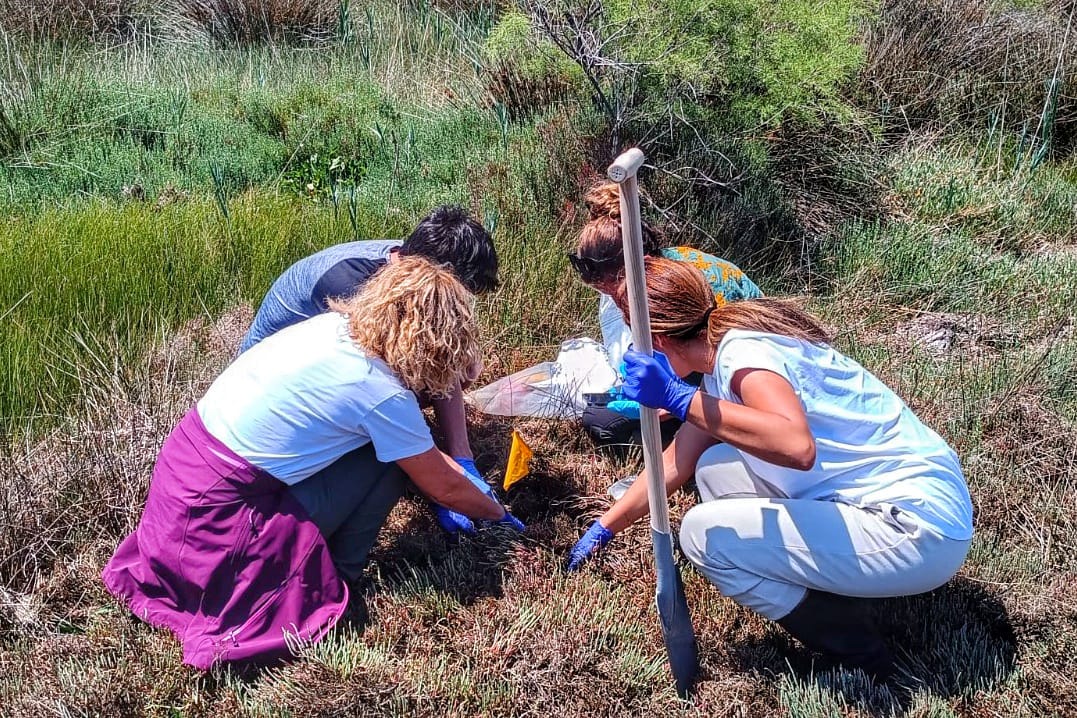
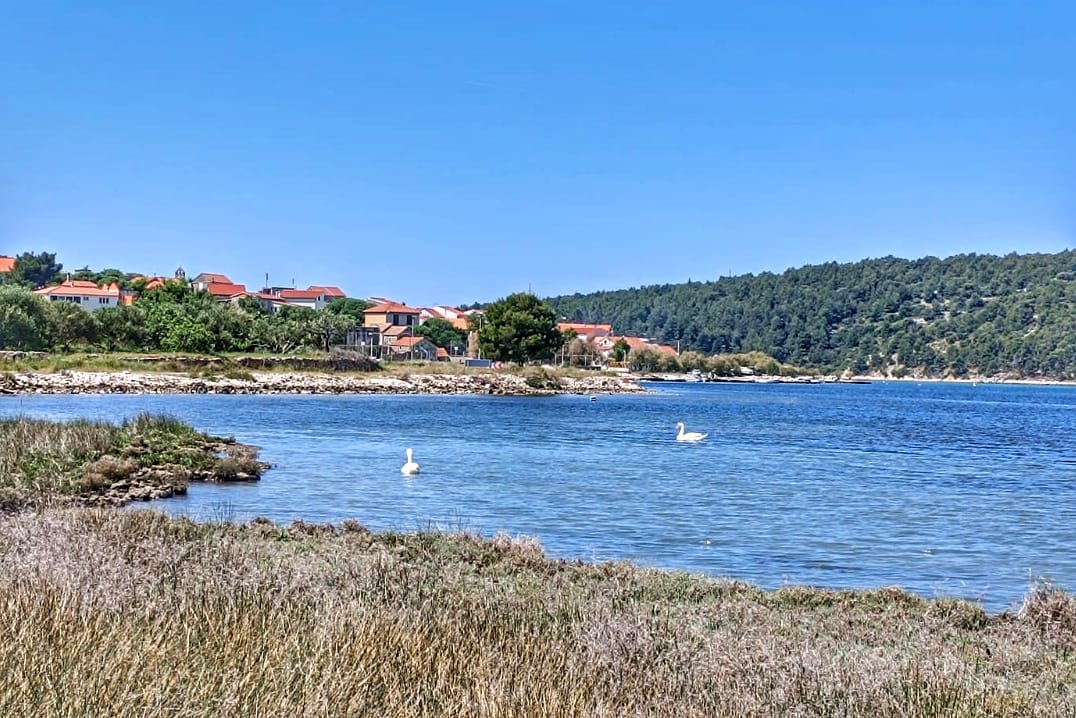
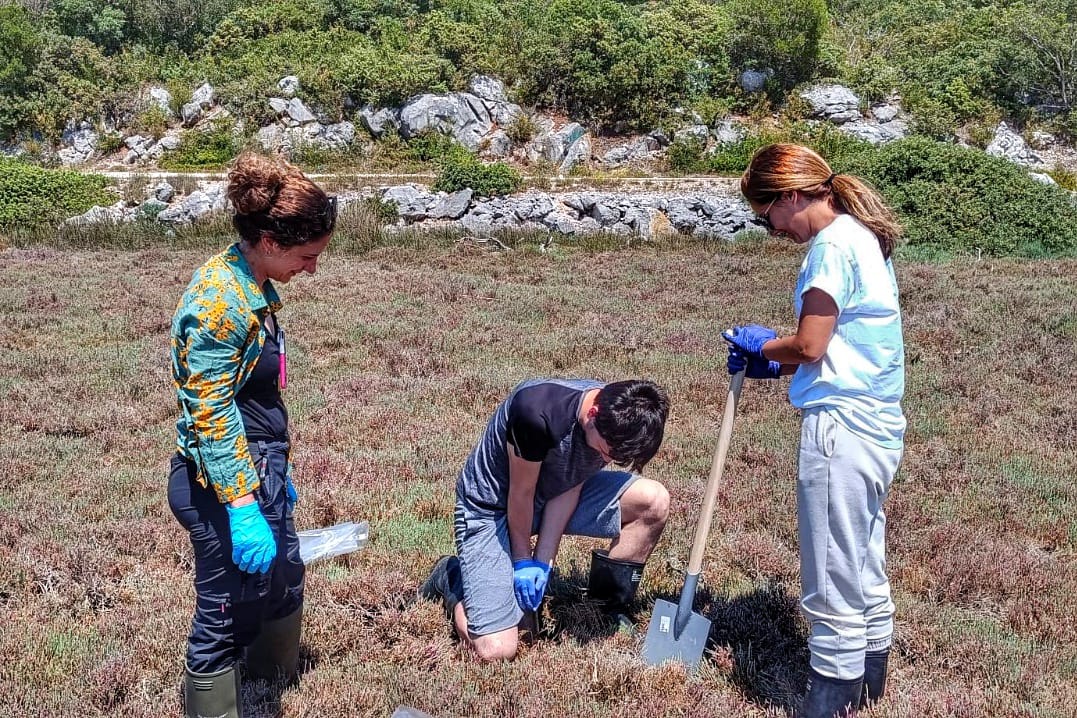
The study was conducted at two sites: Morinje Bay near Šibenik and Blace near the Neretva River estuary. Sediment cores were collected and sectioned at 1 cm intervals to obtain a temporal record of deposition. Chronology was established using radiocarbon dating and radionuclide techniques. Microplastics were extracted via density separation and identified using stereomicroscopy and micro-Fourier Transform Infrared (µFTIR) spectroscopy for polymer characterisation. In parallel, sediment geochemical parameters were analysed, including organic matter content, organic carbon, total nitrogen, phosphorus fractions and grain-size distribution, followed by statistical analyses to assess relationships between microplastics and sediment characteristics.
The results show that microplastics first appear in Morinje Bay around 1950, and in Blace after 1960. Concentrations increase towards the upper, more recent sediment layers, reflecting the global rise in plastic production since the mid-20th century. Morinje Bay exhibits higher concentrations (up to 0.5 particles g⁻¹ dry sediment) dominated by fibres associated with urban and maritime sources, whereas Blace shows lower concentrations (up to 0.05 particles g⁻¹) with fragments linked to local agricultural and packaging-related inputs. Compared to other European saltmarshes, where concentrations of 2–3 particles g⁻¹ have been reported, values along the Croatian coast are lower, suggesting reduced anthropogenic pressure, yet clearly demonstrating that Adriatic coastal systems are part of the global microplastic contamination trend.
This study demonstrates that plastic pollution is not confined to the sea surface and beaches but becomes incorporated into coastal sediments, where it can persist for decades. Saltmarshes thus represent important long-term archives of microplastic contamination. These findings are essential for informing coastal ecosystem management and provide a methodological framework for systematic long-term monitoring of microplastic pollution in the Adriatic and comparable coastal environments.