Science Comes To Town
PROGRAM:
HORIZON-WIDERA-2024-ERA-02
Project title:
Project Science Comes To Town
AcRONyM:
SCTT
Project duration:
1. 6. 2025. – 30. 6. 2027.
:
About project
Science Comes To Town is a leading European project that connects three cities—Kiel, Brest, and Split with over 70 associated partners. The project provides an extensive scientific program over 365 days, including science festivals, contests, and educational events, with the primary purpose of strengthening the connection between science and society. Focus is placed on marine protection, cultural heritage preservation, youth development, and science awareness. Science Comes To Town will improve community bonds, encourage young scientists, and promote a common European identity through science. This project stands out since it encourages long-term partnerships, improves scientific interaction, and strengthens city cooperation.
The Institute of Oceanography and Fisheries, in collaboration with the City of Split, the University of Split, the Split-Dalmatia County Center of Excellence, and a number of partner institutions, will organize a year-round program of events. Although numerous fields of science will be represented, the Institute’s scientists will devote special attention to the sea as one of the most important natural resources.
Project coordinator at the Institute of Oceanography and Fisheries: dr.sc. Daria Ezgeta Balić
Project partners
Coordination and Management
Christian-Albrechts-Universität zu Kiel
(Germany)

KielRegion GmbH
(Germany)
Landeshauptstadt Kiel
(Germany)
Croatian partners
City of Split
(Croatia)
University of Split
(Croatia)
Croatian associated partners

Fotoklub Split
(Croatia)


Kino klub Split
(Croatia)
Udruga za robotiku “Inovatic”
(Croatia)
News
Consortium Meeting in Brest
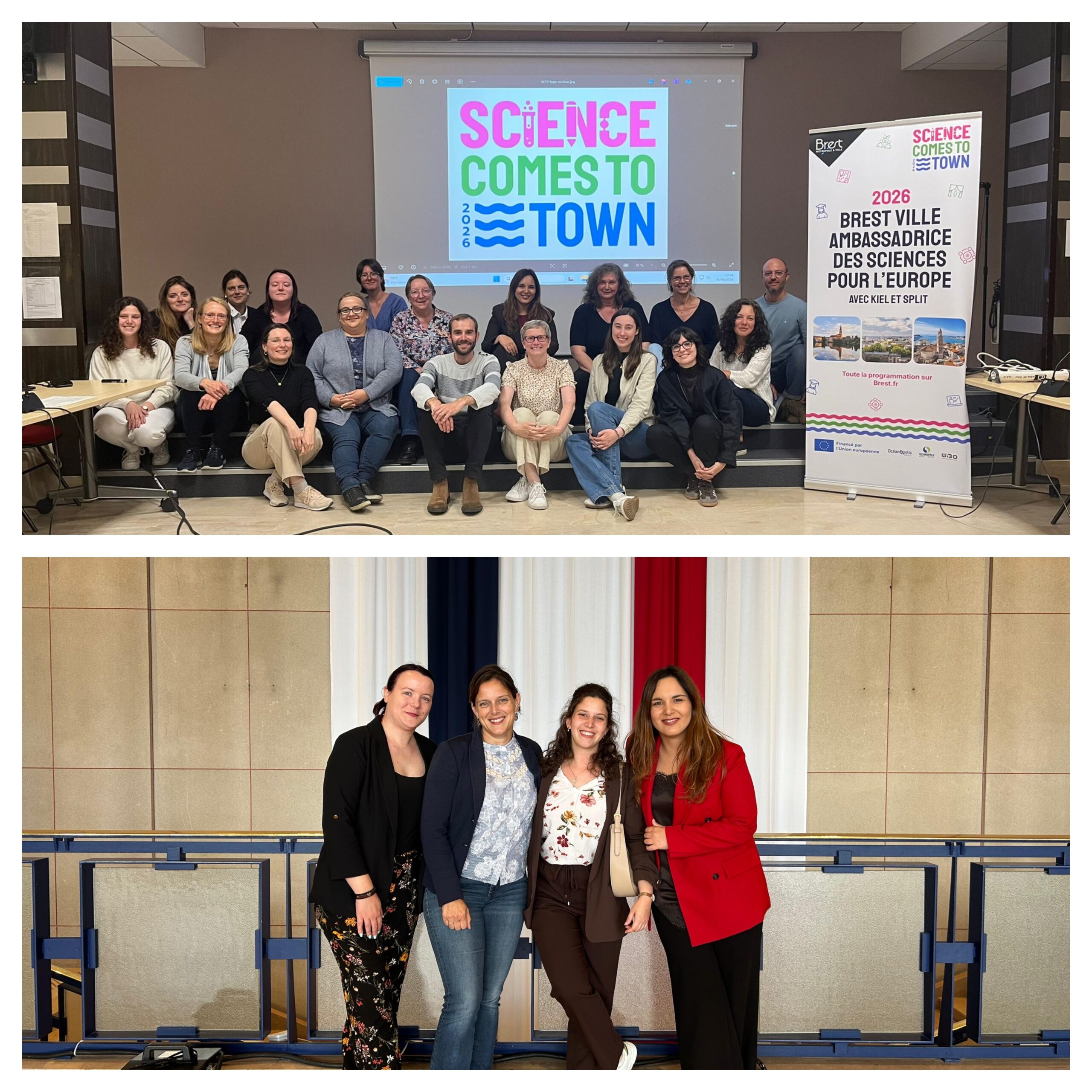
In early June, the project consortium met in Brest to mark the successful completion of the first half of the Science Comes to Town project. Alongside discussions on administrative and technical matters, the meeting provided an excellent opportunity for partners to exchange experiences, share best practices, and explore new ideas that will further enhance the quality and impact of the project’s upcoming activities.
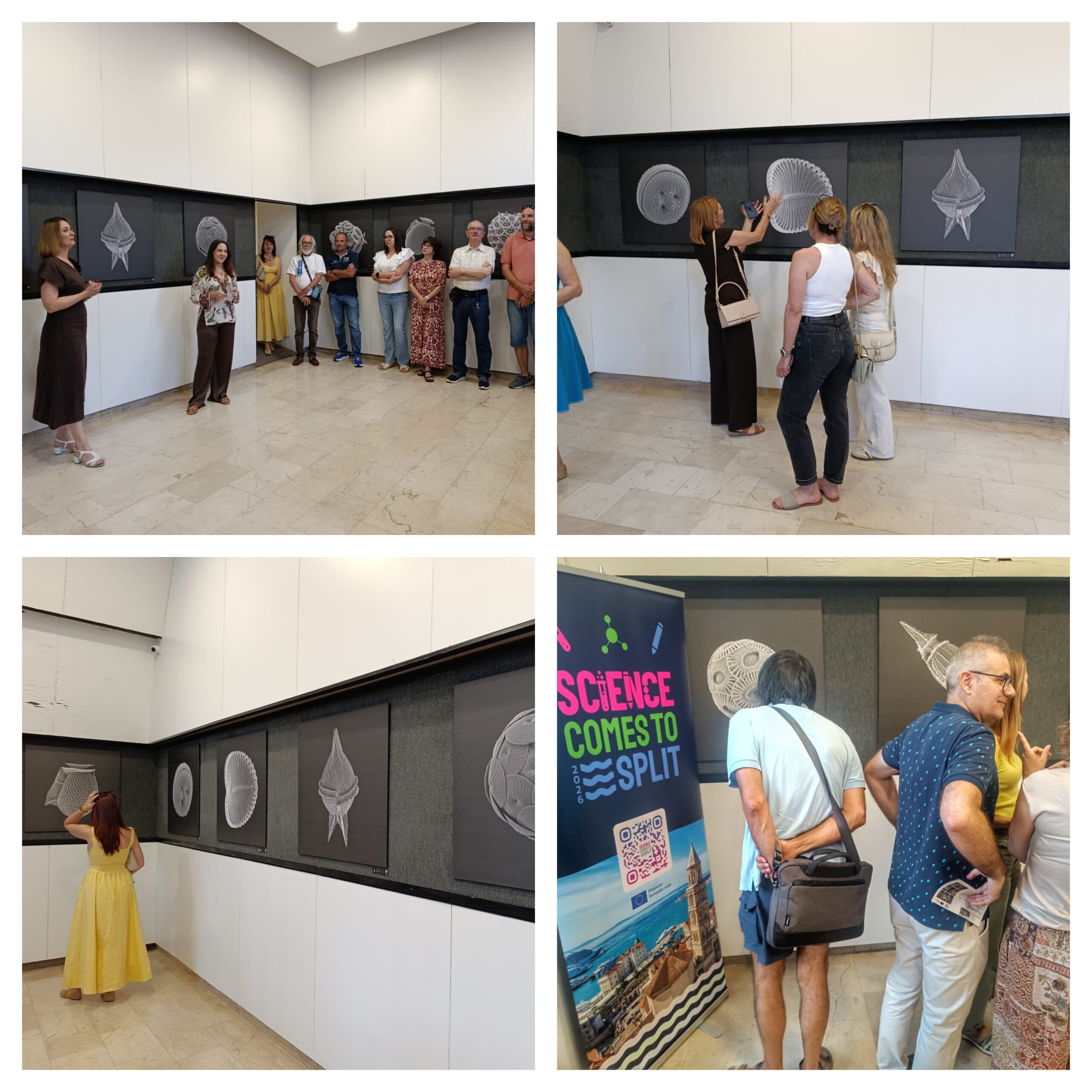
“The Mysterious Life in a Drop of Seawater” Exhibition Opens at Fotoklub Split
To mark World Oceans Day, the Institute of Oceanography and Fisheries opened the exhibition The Mysterious Life in a Drop of Seawater at the Fotoklub Split Photography Gallery. The exhibition was officially opened by Dr Sandra Skejić of the Institute’s Laboratory for Plankton and Shellfish Toxicity, who introduced visitors to the fascinating yet largely invisible world of phytoplankton and its vital role in marine ecosystems.
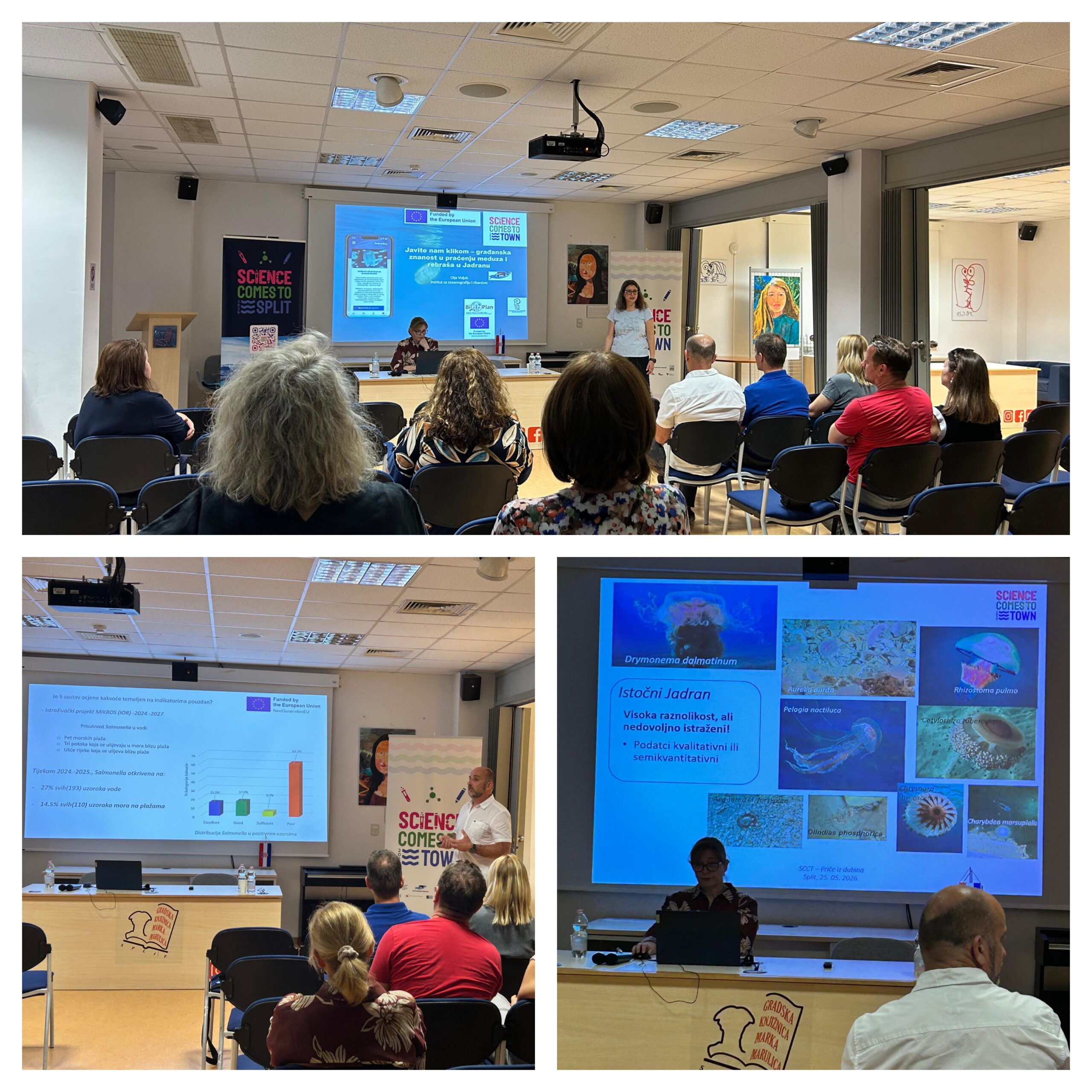
Fourth Edition of the “Stories from the Depths” Lecture series
The fourth edition of the popular science lecture series Stories from the Depths took place at the Marko Marulić City Library. As the final event before the summer break, this edition focused on topics relevant to the upcoming summer season. Dr Olja Vidjak introduced the audience to ways they can contribute to research on gelatinous plankton through citizen science initiatives, while Dr Slaven Jozić presented an overview of seawater quality at beaches across Split-Dalmatia County.
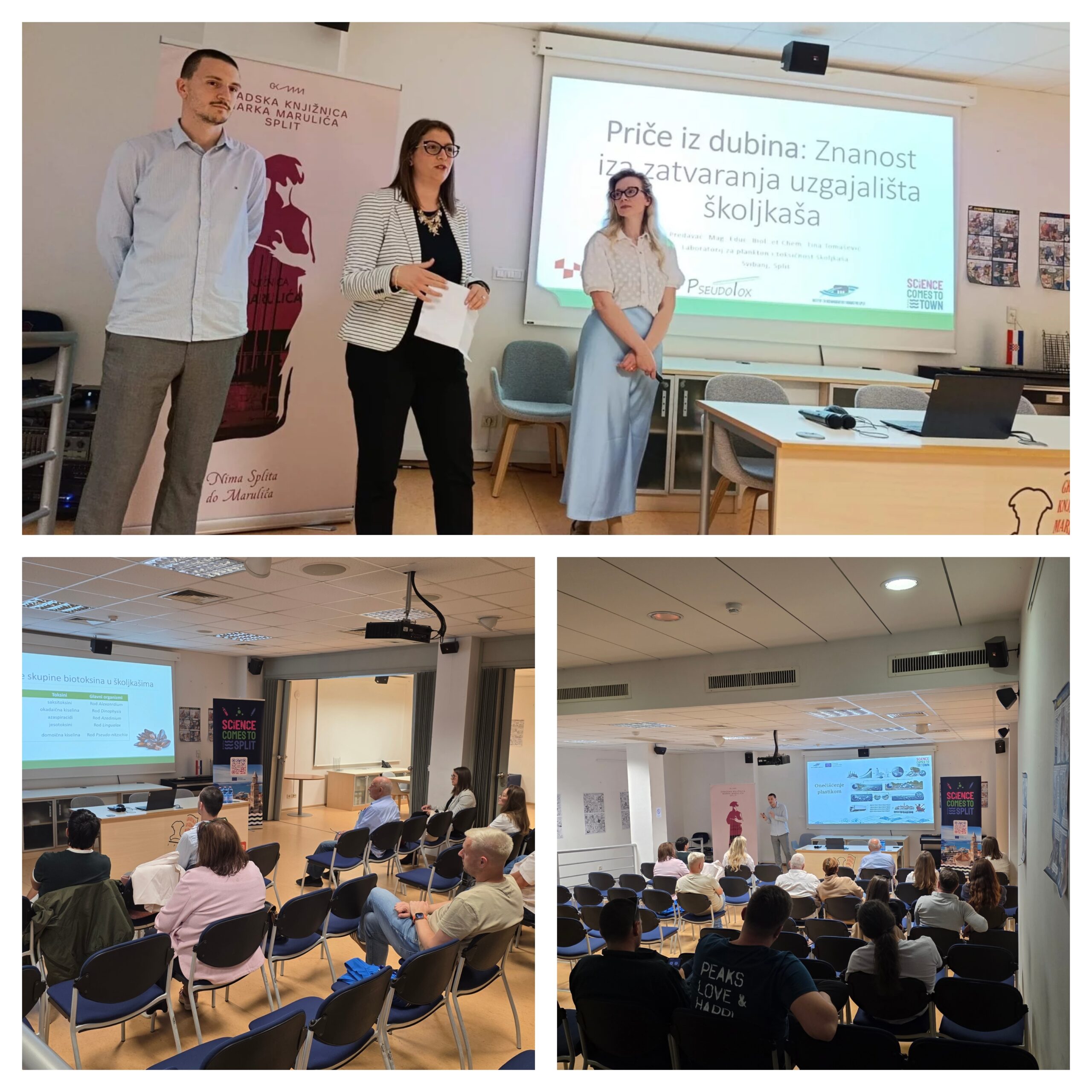
Third Edition of the “Stories from the Depths” Lecture Series
The latest edition of the popular science lecture series Stories from the Depths was held at the Marko Marulić City Library. Through this series, researchers and experts from the Institute of Oceanography and Fisheries bring fascinating topics related to the sea and the marine environment closer to the general public. This edition featured a lecture by Tina Tomašević, titled The Science Behind Shellfish Farm Closures, followed by Microplastics: The Invisible “Resident” of Our Sea, presented by Ante Čović-Stanić.
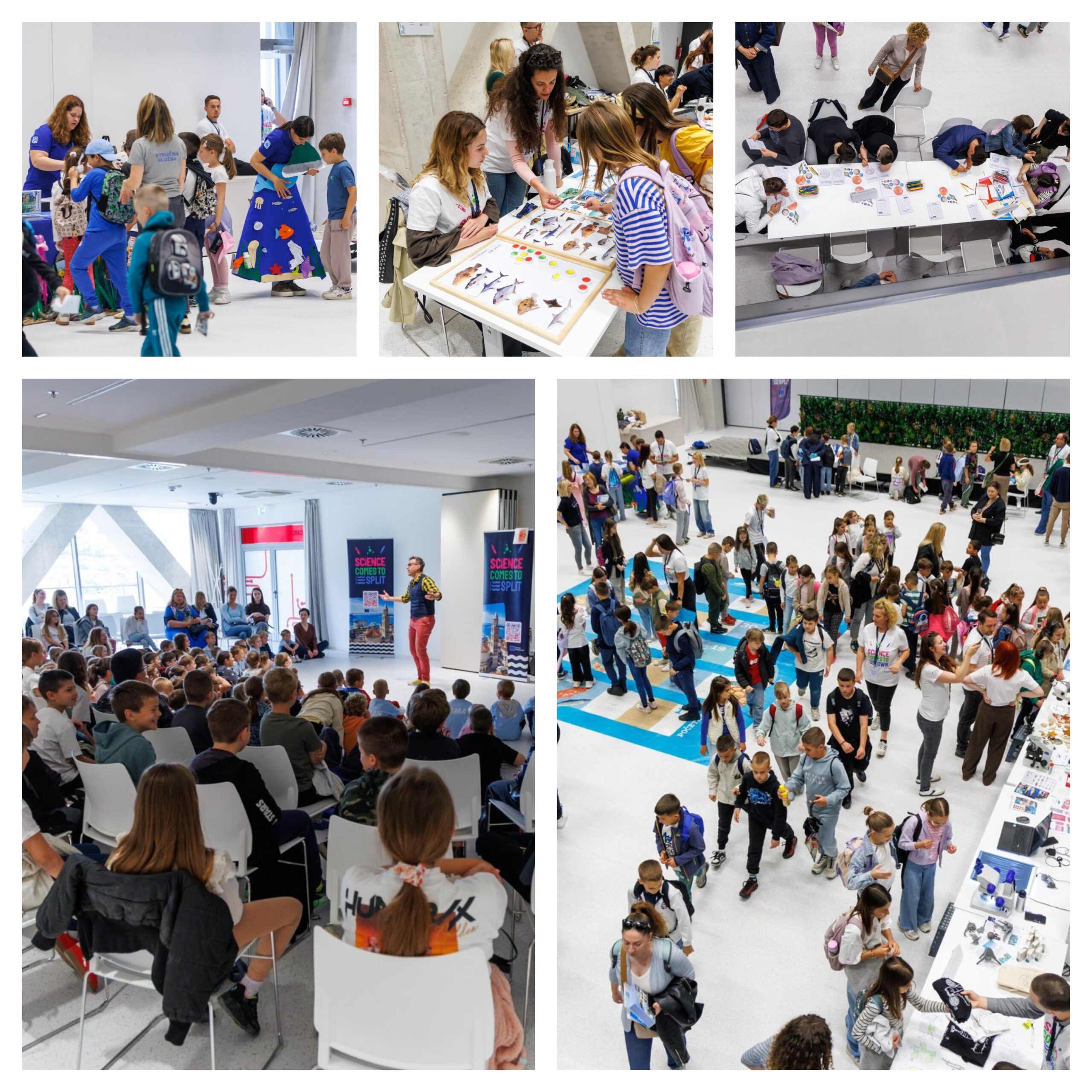
“Science on Marjan hill” Event
Due to unfavourable weather conditions, this year’s Science on Marjan hill event was held at the Technology Park. Despite the change of location, the event attracted more than 600 children, who explored the world of science through hands-on experiments, educational workshops, interactive activities, and the children’s theatrical performance. Experts and educators from around ten institutions and organisations delivered a diverse programme designed to engage children, young people, and the general public in science through fun, creative, and interactive experiences.
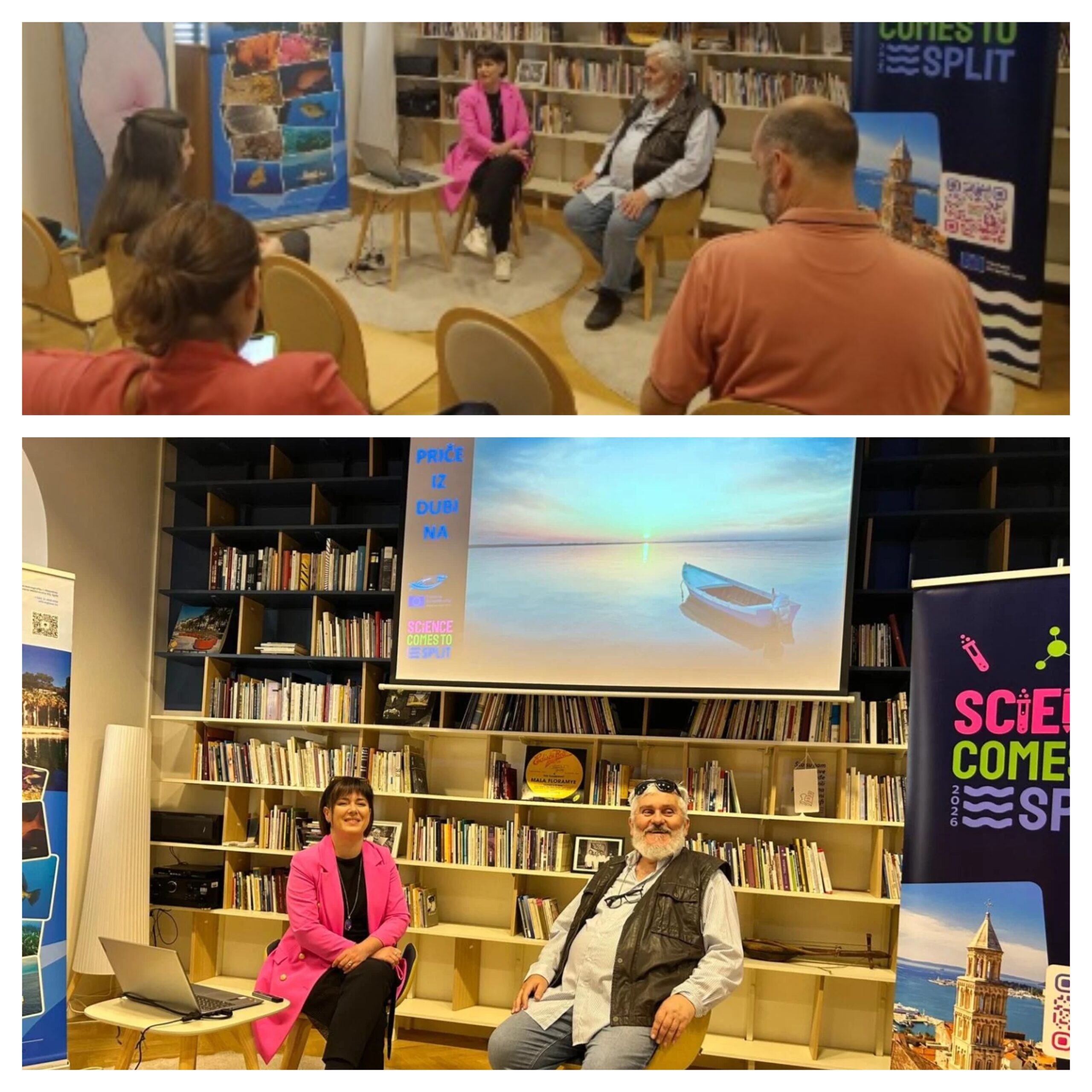
Second Edition of the “Stories from the Depths” Lecture Series
The second edition of the popular science lecture series Stories from the Depths, organised in collaboration with the Marko Marulić City Library in Split, was successfully held.The audience first attended a lecture by Dr Natalija Dunić, titled How Studying Sea Temperature Helped Me Understand Climate Change. This was followed by a lecture from Dr Jakov Dulčić, titled Changes in the Ichthyofauna of the Adriatic and Mediterranean Seas
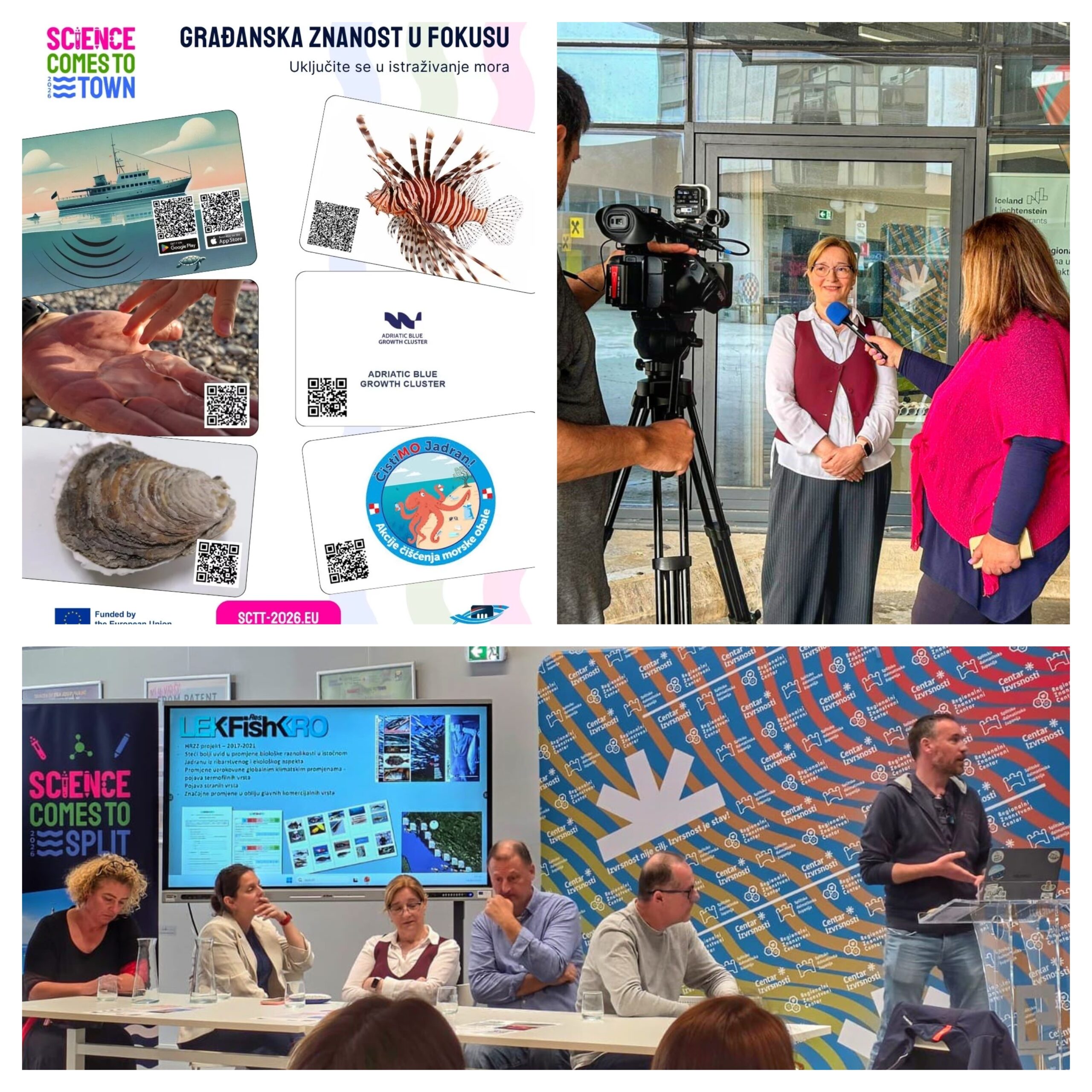
Citizen Science Day Event
As April is the month dedicated to citizen science, the Institute hosted Citizen Science Day, welcoming around fifty participants. The event introduced visitors to the concept of citizen science and showcased the many ways they can actively contribute to scientific research and support the protection of the marine environment.The programme was highly interactive, with participants engaging in lively discussions, asking numerous questions, and showing strong interest in topics related to the sea and marine conservation.
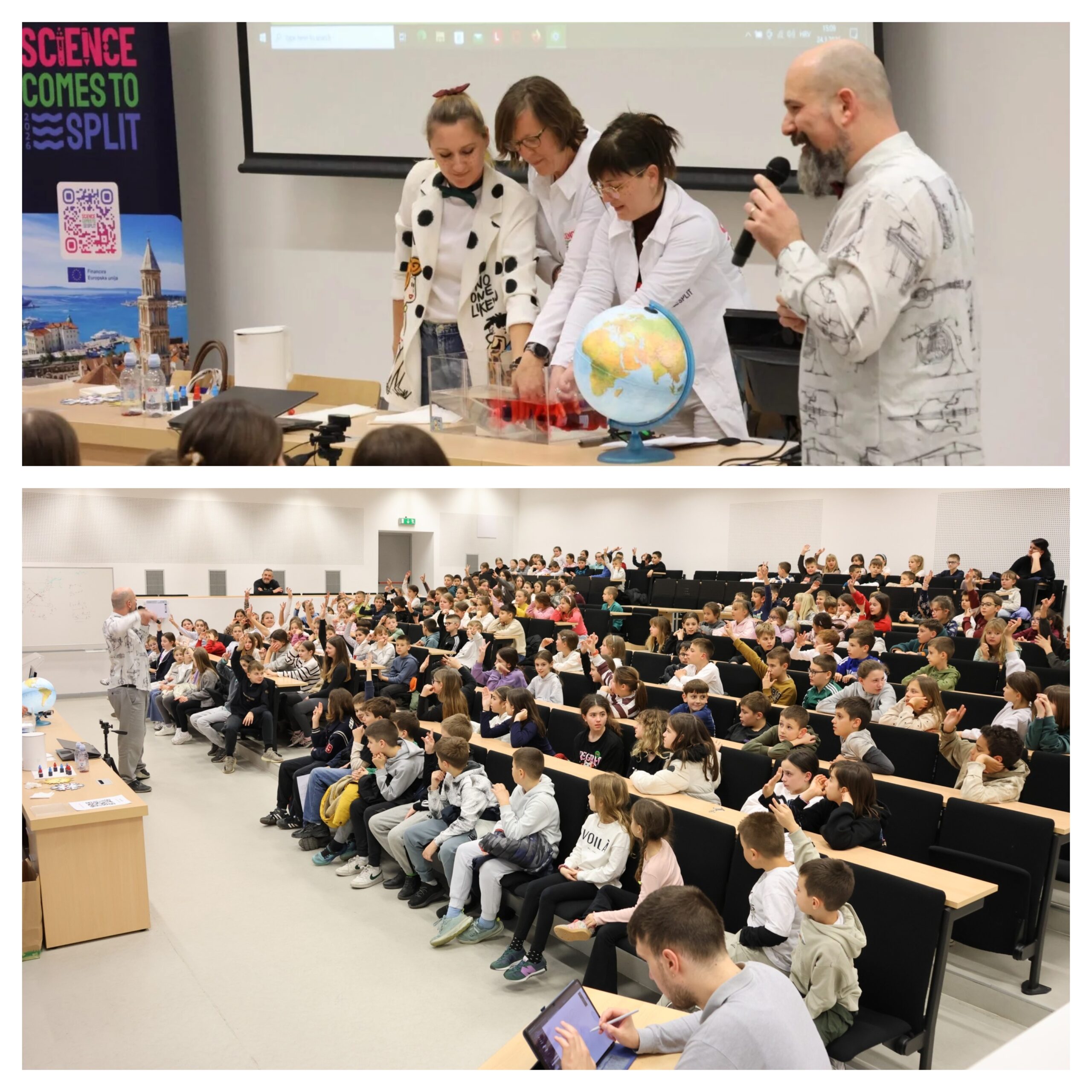
Third Edition of the Children’s University
More than 200 primary school pupils took part in the lecture From the Pole to the Equator: The Journey of a Drop of Seawater, where they learned about the world’s oceans, ocean currents, and their crucial role in shaping Earth’s climate.The lecture was delivered by Dr Natalija Dunić from the Institute of Oceanography and Fisheries, Assistant Professor Marin Vojković, Dr Suzana Antunović, and Associate Professor Jadranka Šepić. See more.
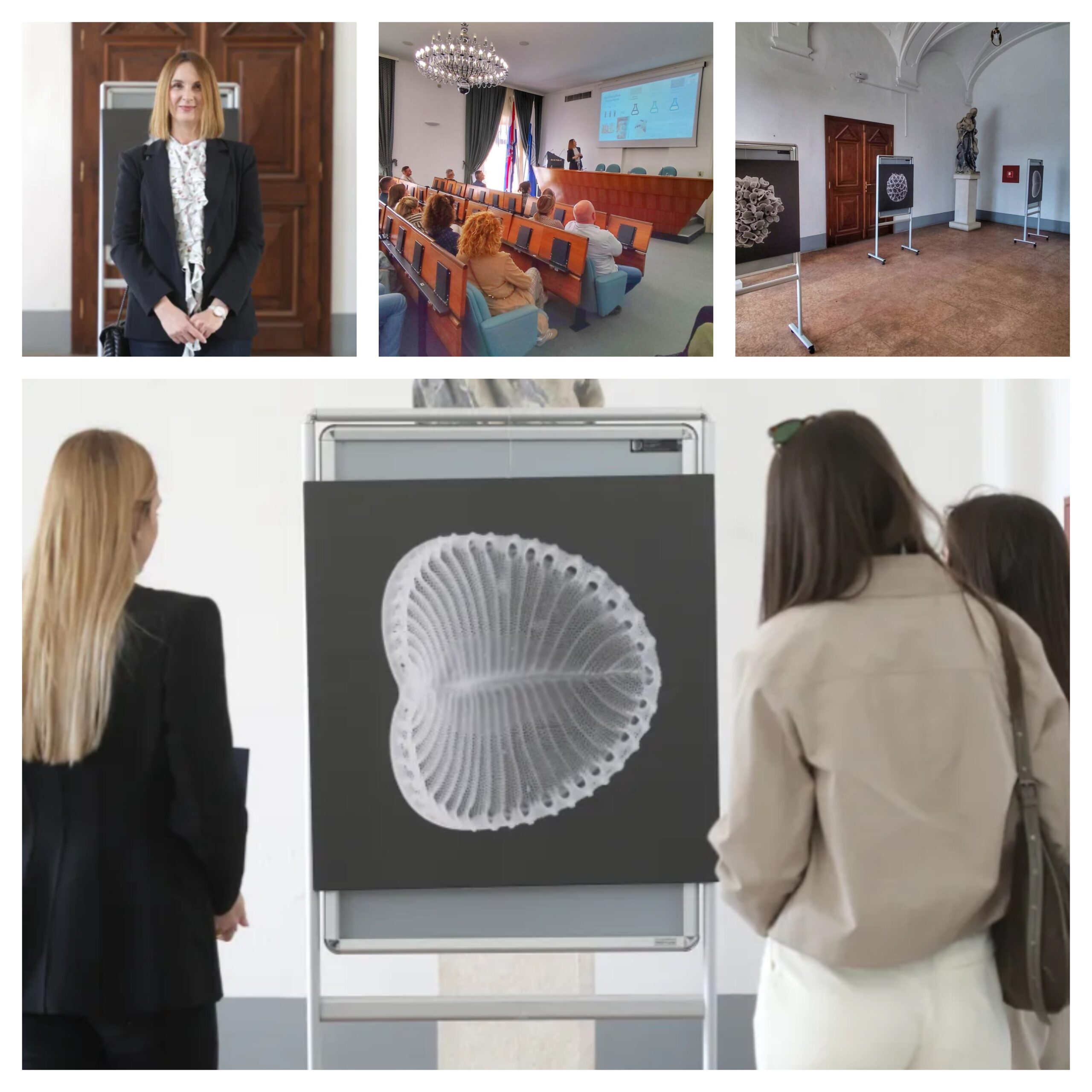
“The Mysterious Life in a Drop of Seawater” Exhibition Arrived in Osijek
Following its successful premiere in Split, the exhibition “The Mysterious Life in a Drop of Seawater” has opened in Osijek. The opening was followed by a lecture by Dr Sandra Skejić, titled Visualising the Invisible: Phytoplankton Research and Its Ecological Importance, which explored the hidden world of phytoplankton and its vital role in marine ecosystems. The event was organised in collaboration with Josip Juraj Strossmayer University of Osijek, the University Gallery of the University of Split, and the Institute of Oceanography and Fisheries.
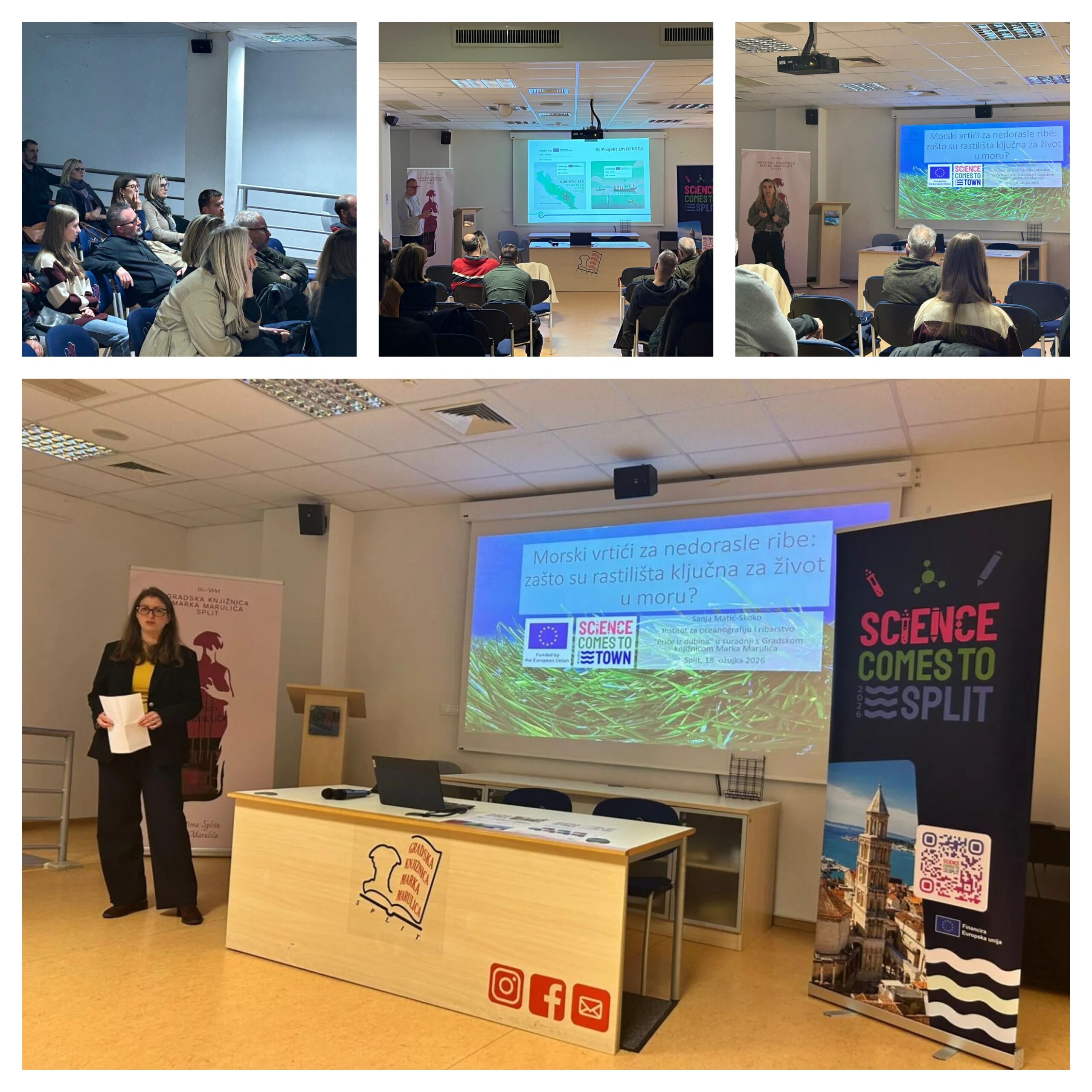
First Edition of the “Stories from the Depths” Lecture Series Held
In collaboration with the Marko Marulić City Library in Split, the Institute launched the popular science lecture series Stories from the Depths, bringing marine science closer to the general public.The first event featured a lecture by Dr Hrvoje Mihanović, titled Sounds from the Depths: Research on Underwater Sound and Noise in the Adriatic. This was followed by Dr Sanja Matić Skoko‘s lecture, Marine Nurseries for Juvenile Fish: Why Nursery Habitats Are Essential for Life in the Sea?, which explored the crucial role of nursery habitats in sustaining healthy marine ecosystems.
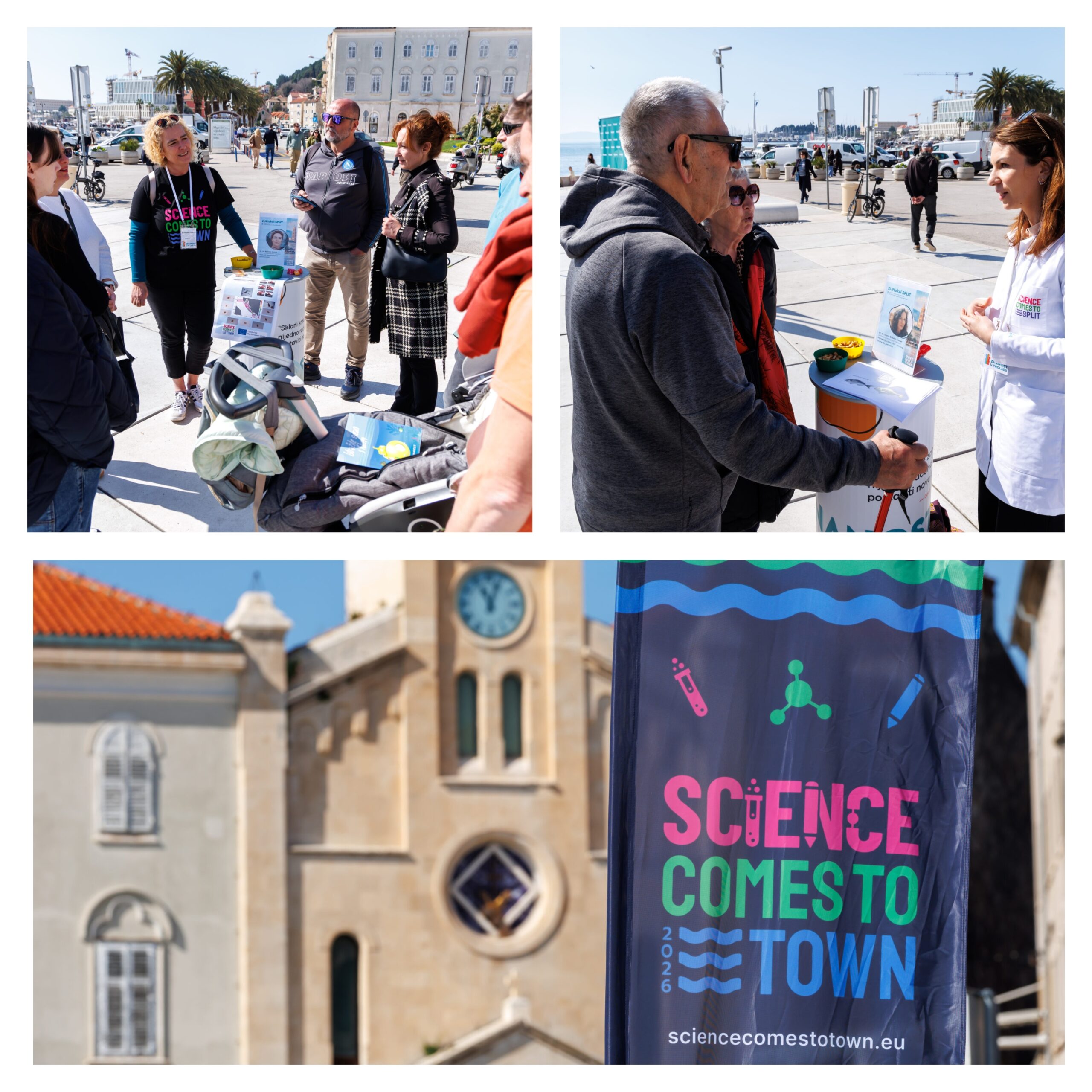
Science Along the Way Comes to Split
To mark International Women’s Day, Split’s city centre became a meeting place for science and the public. Science Along the Way, an outreach event that has been held annually in Zagreb for the past five years, came to Split for the first time, bringing together women scientists from a range of disciplines to share their research with passers-by in an accessible and engaging way. The event is organised by the Science Along the Way Association and was brought to Split as part of the Science Comes to Town project.
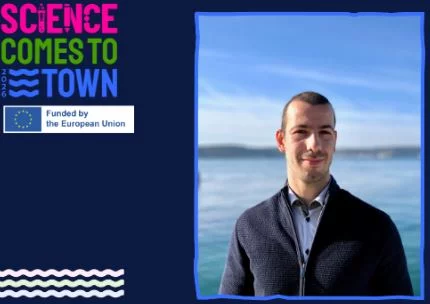
Luka Žuvić Appointed Science Comes to Town Ambassador
In February 2026, Luka Žuvić, a young researcher at the Institute of Oceanography and Fisheries, was appointed as one of the ambassadors of the international Science Comes to Town project. His research and dedication to science communication were recently recognised by Science|Business, the European news and networking platform covering research, innovation, and science policy.
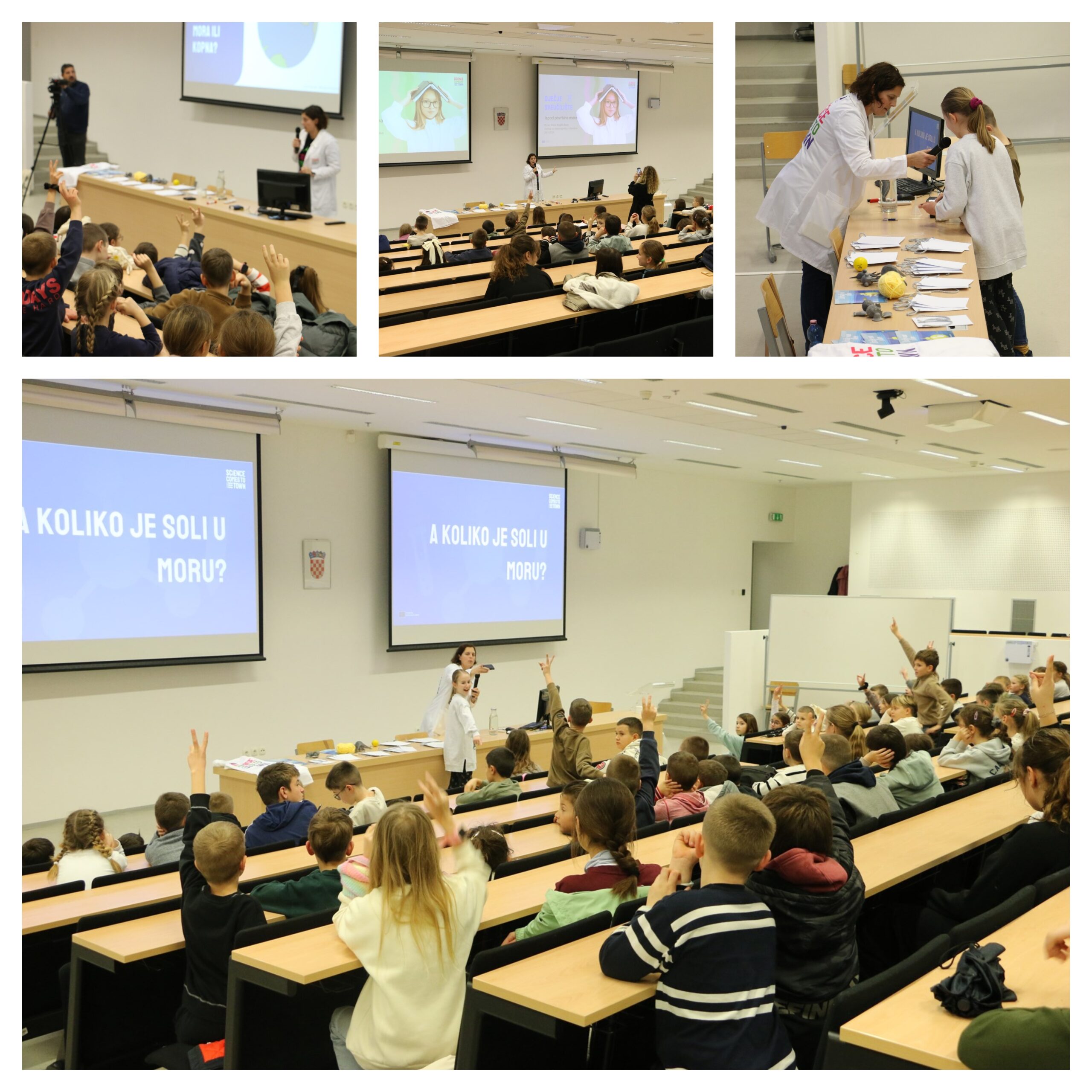
First Edition of the Children’s University
The first edition of the Children’s University took place on 28 January 2026 at the Faculty of Chemistry and Technology in Split, where Dr Daria Ezgeta Balić delivered the lecture Beneath the Sea Surface to an audience of around eighty children of different ages. The Children’s University is a unique European science engagement programme designed for children aged 8 to 14, offering them the opportunity to experience science firsthand in a real university setting. The programme is held simultaneously in the partner cities of Kiel and Brest.
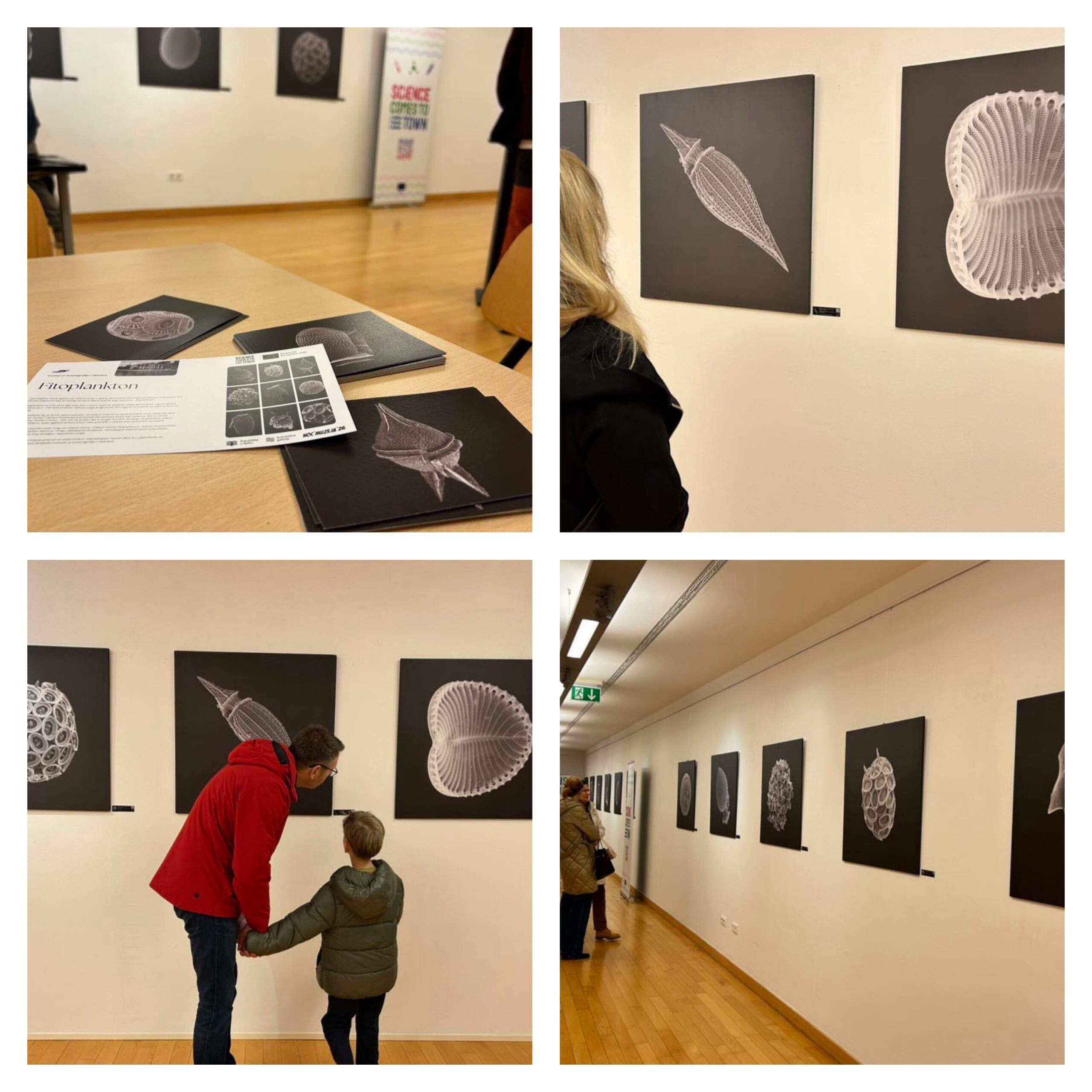
The Mysterious Life in a Drop of Seawater” – Photography Exhibition
As part of the Science Comes to Town project and in celebration of Museum Night, the University Gallery hosted the opening of The Mysterious Life in a Drop of Seawater, a photography exhibition featuring images captured by researchers from the Laboratory for Plankton and Shellfish Toxicity at the Institute of Oceanography and Fisheries.
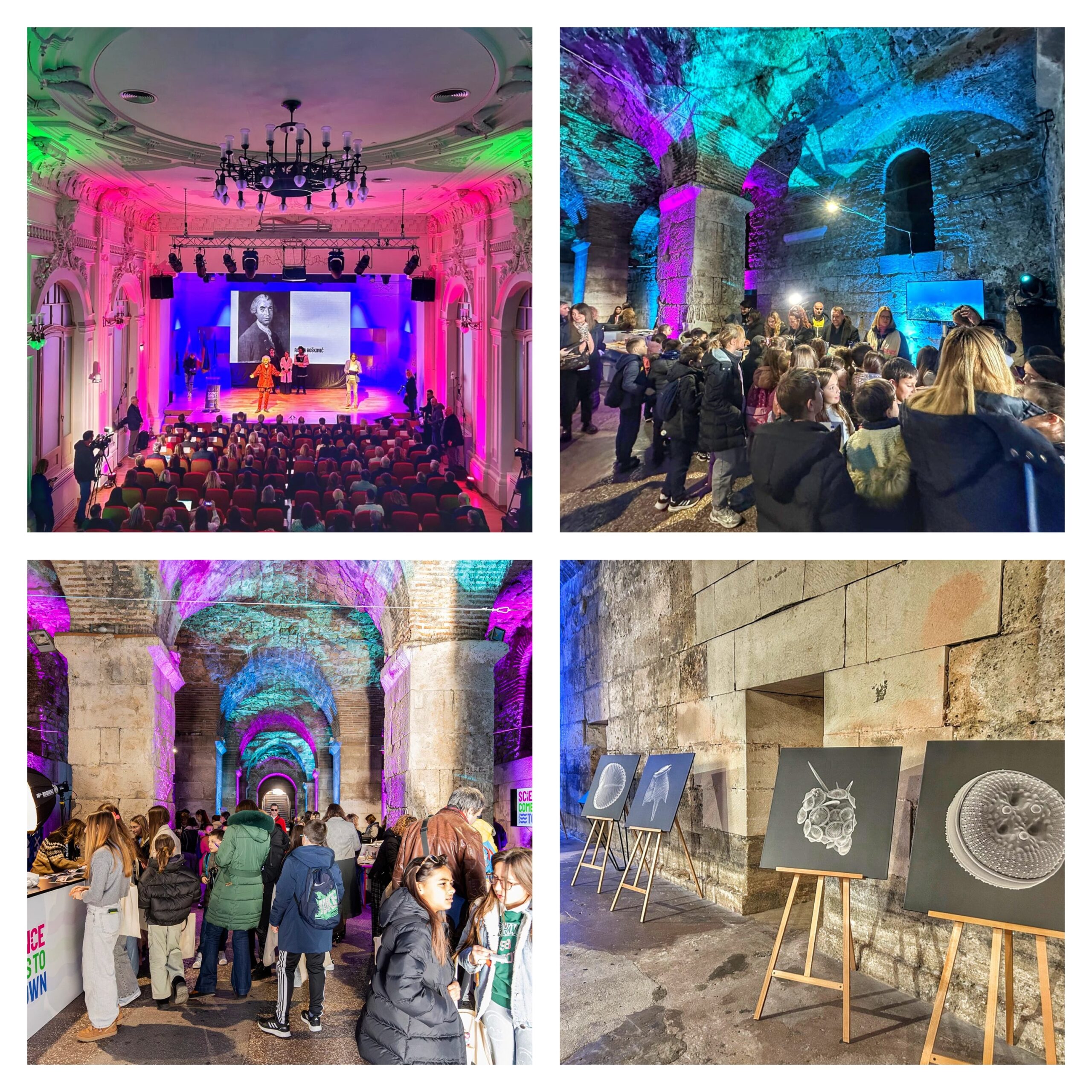
Science Comes to Town – Opening Ceremony in Split
On 21 January, Split hosted the opening of international Science Comes to Town project, funded under the Horizon Europe programme. The initiative connects the cities of Split, Kiel, and Brest and brings together more than 70 European institutions. The launch began with an international conference at the Hrvatski dom, followed by a vibrant programme in Diocletian’s Cellars featuring multimedia displays, exhibitions, and interactive workshops.
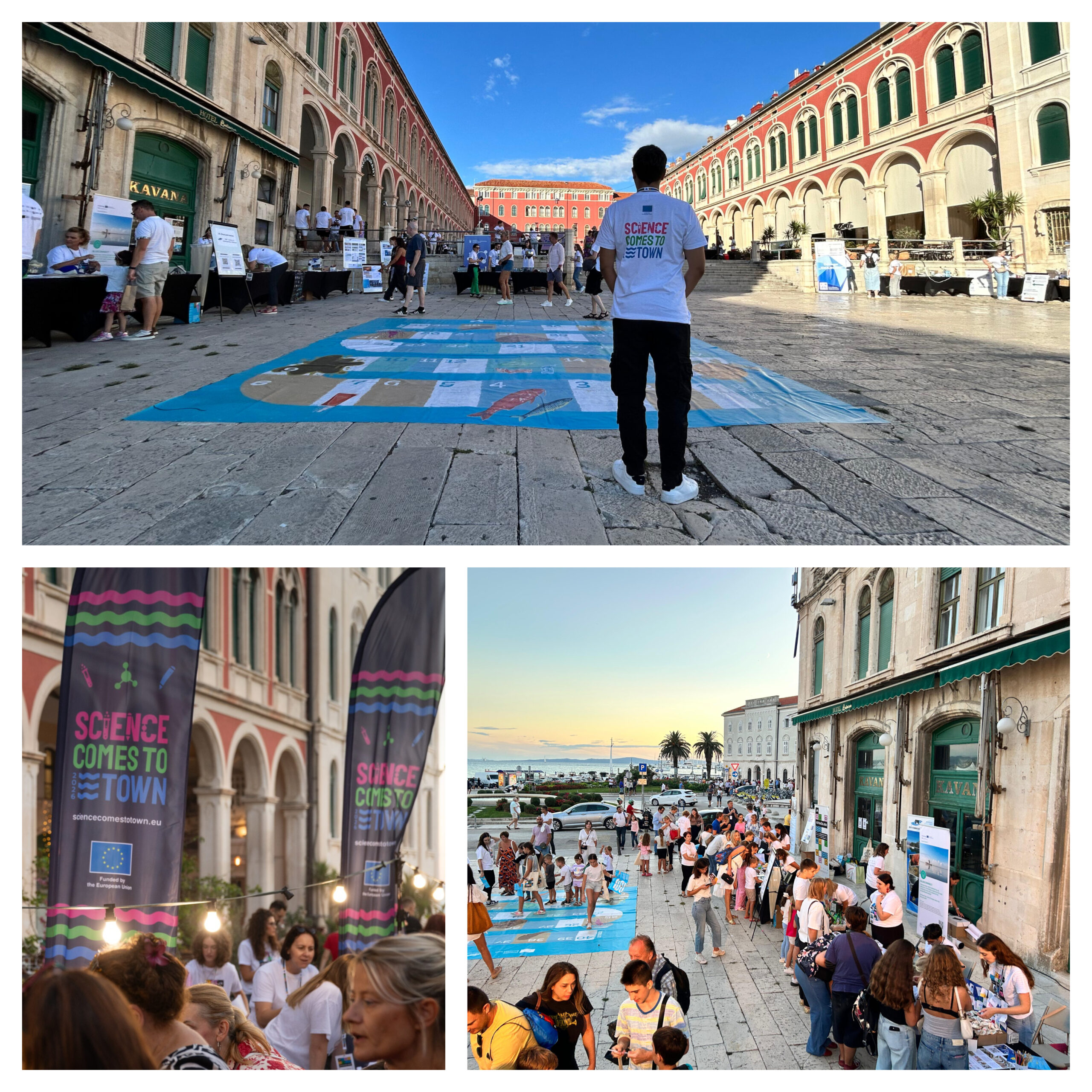
Science Comes To Town at European Researchers’ Night
This year, Split hosted the 20th European Researchers’ Night, an event that brings science to a wider public. Science Comes To Town had the opportunity to announce an exciting new chapter, with over 1000 science-related activities open to the public in 2026. For more information on how much we enjoyed the Researchers’ Night, click the link.
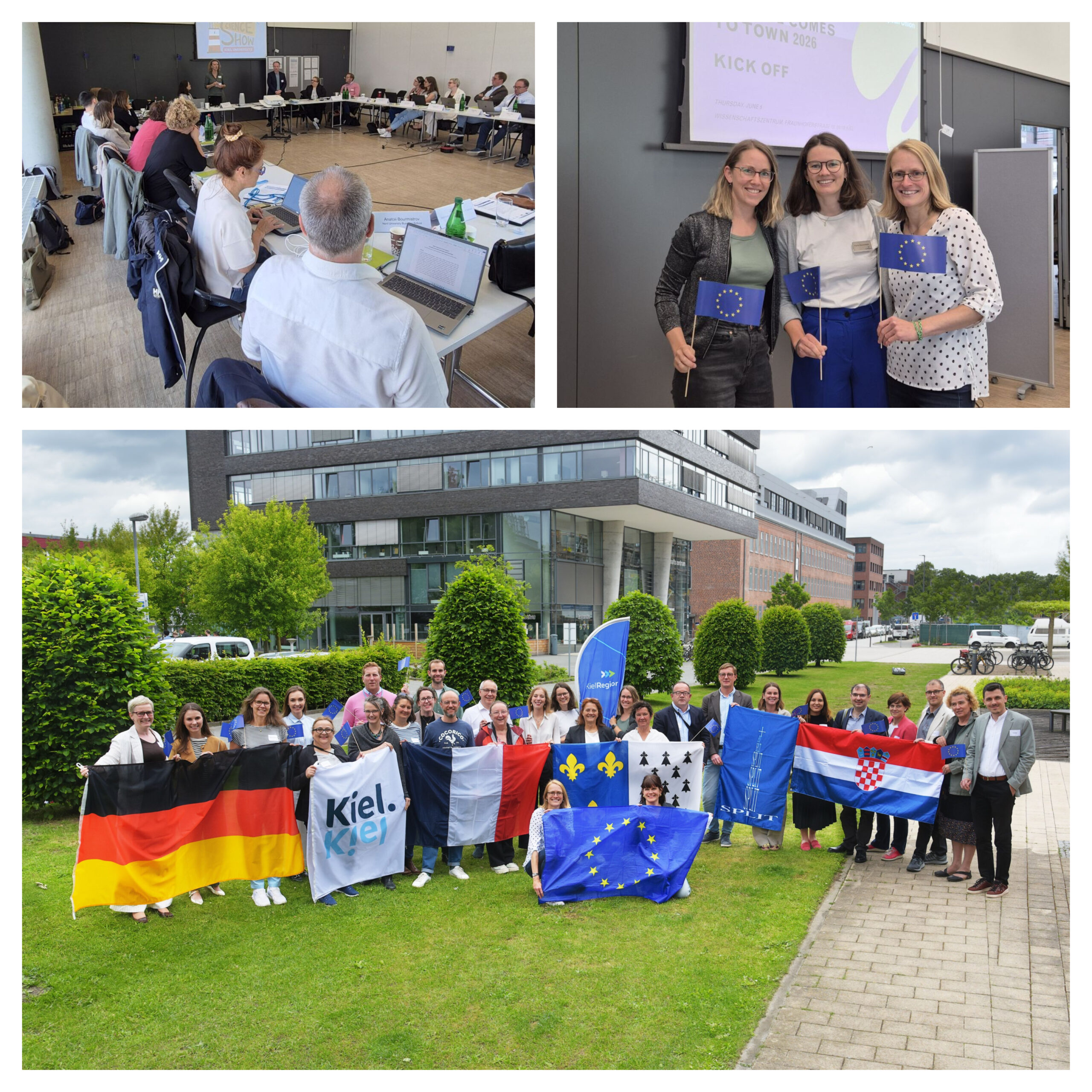
KICKOFF meeting in Kielu
At the beginning of June, a kickoff meeting was held in Kiel to officially start Science Comes To Town, a leading European project coordinated by the cities of Kiel, Brest, and Split.
Funded by the European Union. Views and opinions expressed are however those of the author(s) only and do not necessarily reflect those of the European Union or the European Research Executive Agency. Neither the European Union nor the granting authority can be held responsible for them.