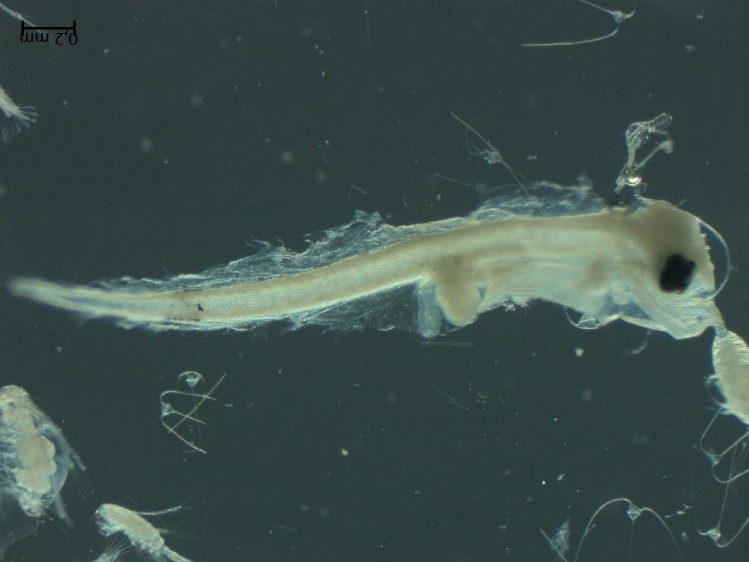
Large pelagic fish represent an important component of marine ecosystems and Croatian fisheries, with Atlantic bluefin tuna occupying a central position in both scientific and economic contexts.
Other important species, such as bullet tuna (Auxis rochei) and little tunny (Euthynnus alletteratus), have historically been less studied, particularly regarding their spawning and population structure. One of the main reasons is that juvenile stages, up to approximately 20–25 cm in length, closely resemble tuna, which has hindered reliable field identification.
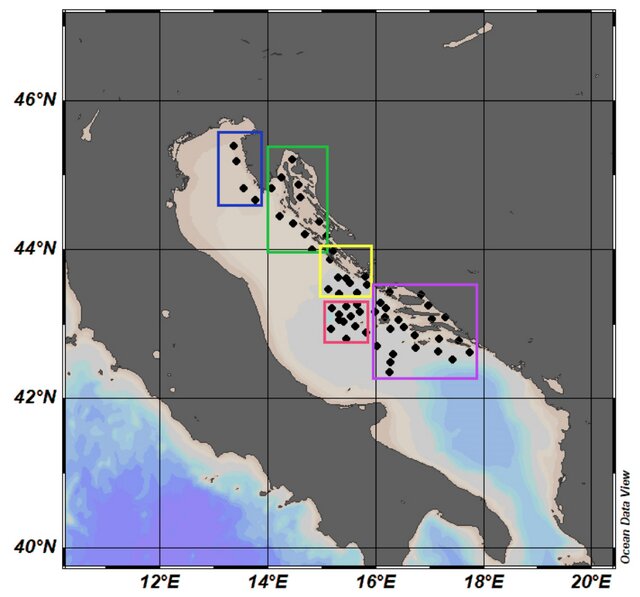
Long-term research and data collection across the Adriatic Sea have enabled scientists from the Laboratory for Aquaculture and the Laboratory for Fisheries Biology of our Institute to obtain important new insights into these species. In a study published in the journal Estuarine, Coastal and Shelf Science, researchers demonstrated a reliable method for distinguishing juvenile individuals of large pelagic fish in the Adriatic. By combining geometric morphometrics and DNA barcoding, they also provided key insights into the role of the Adriatic Sea in their reproduction.
The results show that the Adriatic Sea is not merely a transit area in the life cycle of these species, but also an important spawning ground and nursery area. Large pelagic fish in the Adriatic are part of a broader Mediterranean population. Bullet tuna exhibits the highest genetic diversity and connectivity with the rest of the Mediterranean, whereas little tunny shows lower genetic diversity but significant genetic structuring at the Mediterranean scale. Atlantic bluefin tuna, as a highly migratory species, displays generally low to moderate genetic diversity, with some degree of regional structuring.
Geometric morphometrics proved to be a reliable method for species identification, as it enables accurate recognition of juvenile individuals while clearly capturing ontogenetic shape changes and providing biologically relevant information beyond that offered by traditional methods.
This study represents an important step forward in the management of large pelagic fish fisheries, as it provides, for the first time, concrete data that can be used to develop targeted conservation measures during sensitive life stages. At the same time, the development of a practical and reliable method for identifying juvenile individuals allows for more effective monitoring of catches and bycatch under real fishing conditions, without the need for costly genetic analyses.
This research was fully funded by the Croatian Science Foundation through the project HRZZ-IP-2022-10-7232 “Enhancing Environmental Performance of Net-Pen Marine Aquaculture”. The work of PhD candidate Luka Žuvić was supported through the Croatian Science Foundation’s Young Researchers’ Career Development Project – Training of Doctoral Students. Additional support was provided by fishing crews and professional fishers who contributed to sample collection during their regular fishing activities.