Climate change and plastic pollution are among the most pressing global environmental challenges today. Plastic production has increased dramatically over the past century and is now recognised as a major threat to terrestrial and aquatic ecosystems, including rivers and seas. Most plastic waste entering marine environments originates from land, largely due to shortcomings in waste management systems, as well as tourism and recreational activities.
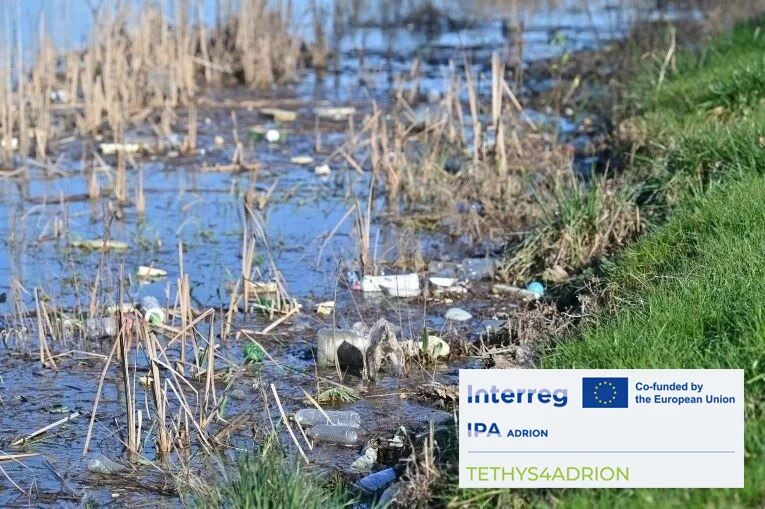
Rivers represent key pathways through which waste reaches the marine environment, with an estimated 40–50% of marine litter originating from land-based sources and transported via river systems. Rivers themselves can retain significant amounts of diverse waste, predominantly plastic, contributing to serious environmental pollution and ecosystem degradation.
Riverine litter is an increasingly significant cross-sectoral global challenge and a complex societal issue involving multiple responsibilities and no simple solutions. Removing waste from rivers presents a major challenge, and best practices for prevention, reduction and cleanup require a combination of behavioural changes, infrastructure improvements and targeted actions.
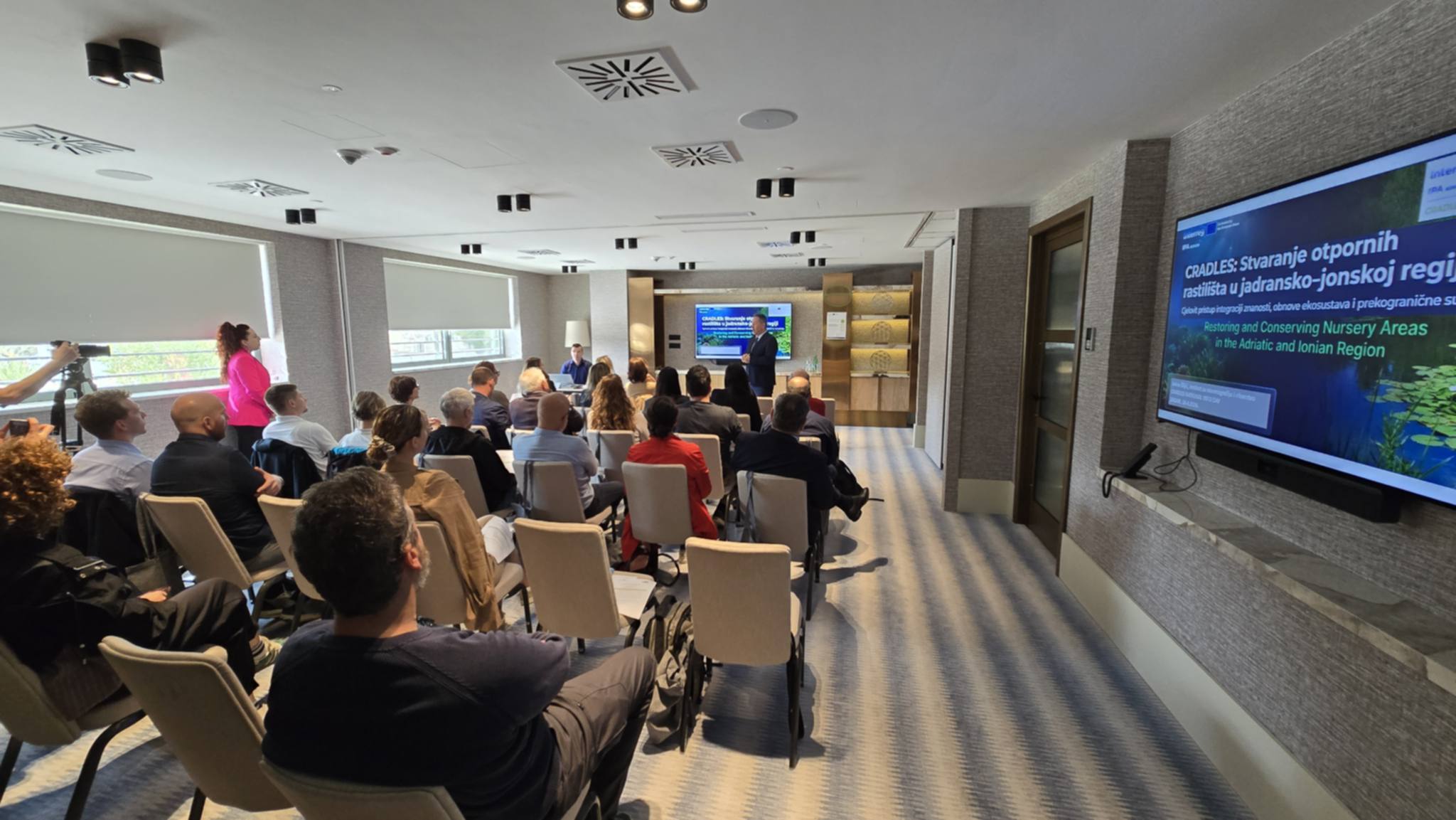
In this context, on 12 February 2026 in Metković, within the framework of the TETHYS4ADRION project, a workshop entitled “Implementation of Best Practices and Measures to Prevent Plastic Waste Generation” was organised by project partners the Institute of Oceanography and Fisheries from Split and the City of Metković. The workshop gathered key stakeholders important for identifying and analysing best practices and measures to address plastic waste issues in rivers.
The TETHYS4ADRION project focuses on the link between land, rivers and seas in relation to plastic pollution in the Adriatic–Ionian region. It involves scientific institutions and authorities from Croatia, Bosnia and Herzegovina, Slovenia, Italy, Montenegro, Albania and Greece. More information is available at the project web page.
Approximately twenty invited stakeholders participated in the workshop, including representatives of local government, non-governmental organisations, utility companies and other relevant institutions. The workshop was led by representatives of the City of Metković—Ms Lara Šiljeg, Ms Ana-Marija Prović and Ms Sanda Tomić—and by scientists from the Institute of Oceanography and Fisheries, Dr Pero Tutman and Dr Dubravka Bojanić Varezić. Participants were introduced to planned project activities, the issue of riverine litter and its local and regional impacts, as well as preliminary research results for the Neretva River. Key findings, identified pressures, accumulation points and the importance of coordinated action were highlighted.
The aim of the workshop was to familiarise key stakeholders in the Neretva River valley with project activities and actively involve them in their implementation, particularly in identifying the most promising measures for addressing riverine waste. The collected information will serve as a valuable platform for defining and implementing effective measures to reduce plastic inputs into rivers, support removal of accumulated waste and improve waste management systems in the Neretva River basin.
The central part of the workshop focused on presentations and discussion of proposed measures. Scientists presented best practices for preventing, reducing and cleaning up waste in rivers, emphasising a combination of behavioural change, infrastructure improvements and targeted actions.
Preventive measures focus on stopping plastic from entering watercourses at the source. These include reducing the use of single-use plastics, improving waste management systems through efficient collection, sorting and disposal, raising public awareness about proper waste handling and environmental impacts, and implementing extended producer responsibility policies that hold manufacturers accountable for the lifecycle of their products, including post-consumer collection and recycling.
Reduction measures aim to slow the flow of plastic through the system and prevent its accumulation. These include restricting the use of microplastics in cosmetics and other products, improving the efficiency of wastewater treatment plants and promoting circular economy models that keep materials in use for as long as possible, thereby reducing the need for new plastic production and waste generation.
Remediation measures involve the active removal of plastic already present in rivers and associated ecosystems. These include technological solutions such as physical barriers, nets and automated collection systems for floating waste at strategic river points, regular clean-up actions along riverbanks and riverbeds organised by volunteers and municipal services, as well as mapping and monitoring pollution to identify hotspots and enable more targeted and effective clean-up actions.
Measures to reduce the quantity and impact of waste in rivers require a combination of legislative, infrastructural, educational and individual actions. Key measures include improving waste management systems in riverine communities, reducing single-use plastic consumption through regulation and promotion of reusable alternatives, raising awareness among the public and industry, installing waste-capture infrastructure such as floating barriers and nets, remediating illegal dumpsites near water bodies and organising regular volunteer clean-up actions. The combined implementation of these measures can significantly reduce the amount of waste entering river ecosystems.
Following the presentations, participants jointly evaluated and prioritised proposed measures using a scoring matrix method, assessing them according to effectiveness, feasibility and social acceptance.
Measures selected for implementation during the project include: plastic-free events, cooperation with commercial facilities along the Neretva River, development of a pilot floating barrier model for collecting floating waste, proper management of agricultural plastic waste and a river clean-up programme.
Plastic-free events aim to significantly reduce the use of single-use plastics and promote circular economy principles and sustainability. Such events are increasingly becoming standard practice within the European Union due to new packaging waste regulations encouraging reuse and restricting harmful plastic formats.
Cooperation with commercial facilities along the Neretva River involves identifying facilities assessed as sources of plastic pollution and implementing targeted activities to reduce plastic inputs into the river. These may include production, retail or hospitality facilities located near the riverbanks.
The pilot floating barrier model involves designing and testing a prototype system for collecting floating waste, along with monitoring the composition and quantity of collected material.
Proper management of agricultural plastic waste includes separate collection, sorting, cleaning and delivery to authorised recycling or recovery companies. Agricultural plastics such as films, nets and packaging are treated as production waste and must be managed according to specific regulations to prevent environmental contamination.
The river clean-up programme combines shoreline clean-ups and diving actions aimed at long-term management of plastic waste and prevention of further pollution of rivers and seas. The focus is on mechanical removal of plastic, mapping and remediation of illegal dumpsites and restoration of river ecosystems.
The workshop concluded with the presentation of next steps, including testing of pilot measures, a timeline for implementation and opportunities for stakeholder involvement. Local environmental organisations from the Neretva River valley will be actively involved in implementing selected measures with financial support from the project.
The workshop ended with an open discussion during which participants highlighted key challenges in waste management and plastic pollution reduction in the Neretva River system, emphasising the importance of coordinated, cross-sectoral action in addressing this complex environmental issue.