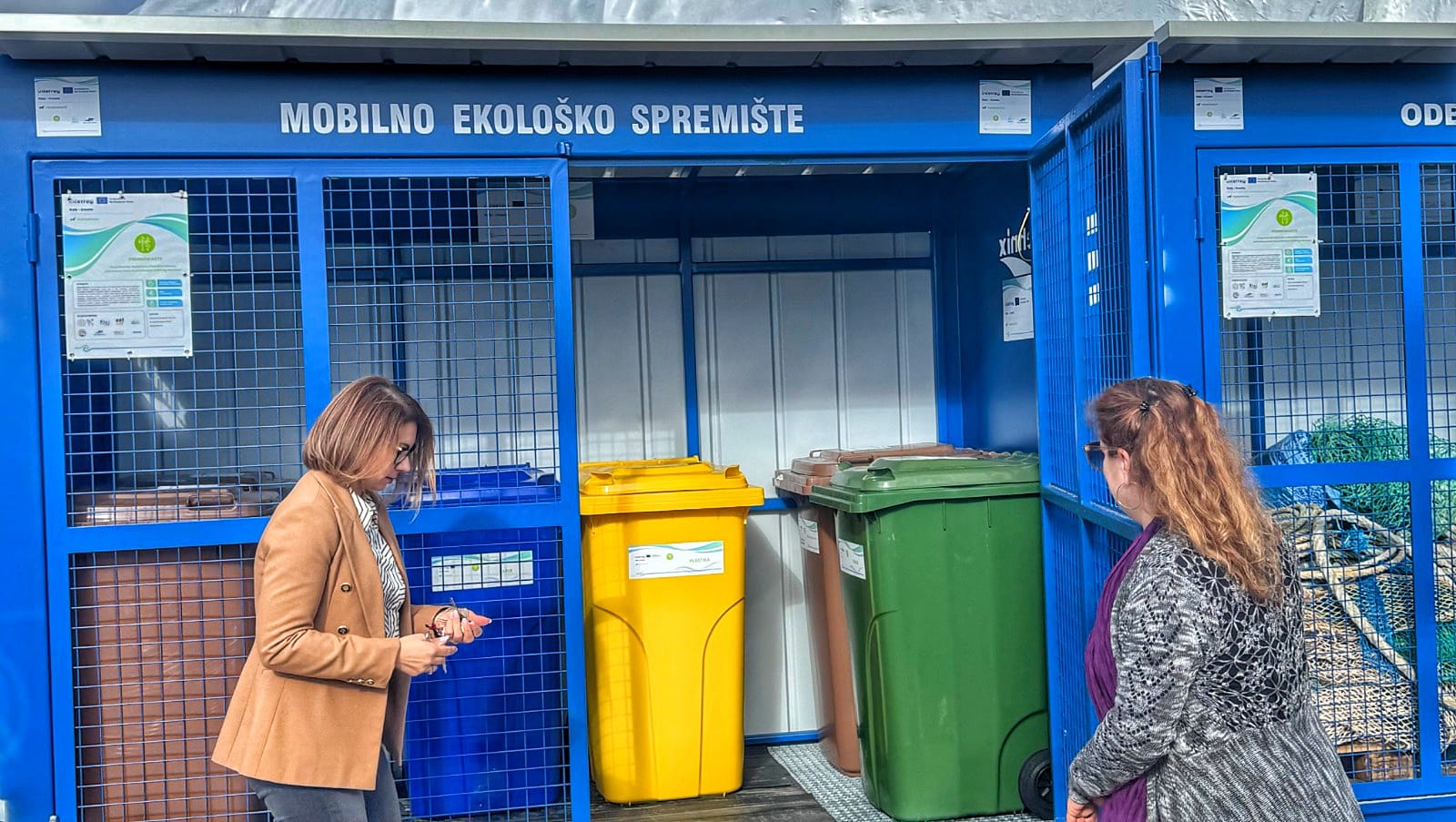
The fishing port of Tribunj is an outstanding example of good practice in how fishing cooperatives can and should approach waste management in the Adriatic region. A systematic approach, long-term cooperation with relevant institutions, and tangible results on the ground make this port one of the most positive examples along the Adriatic coast.
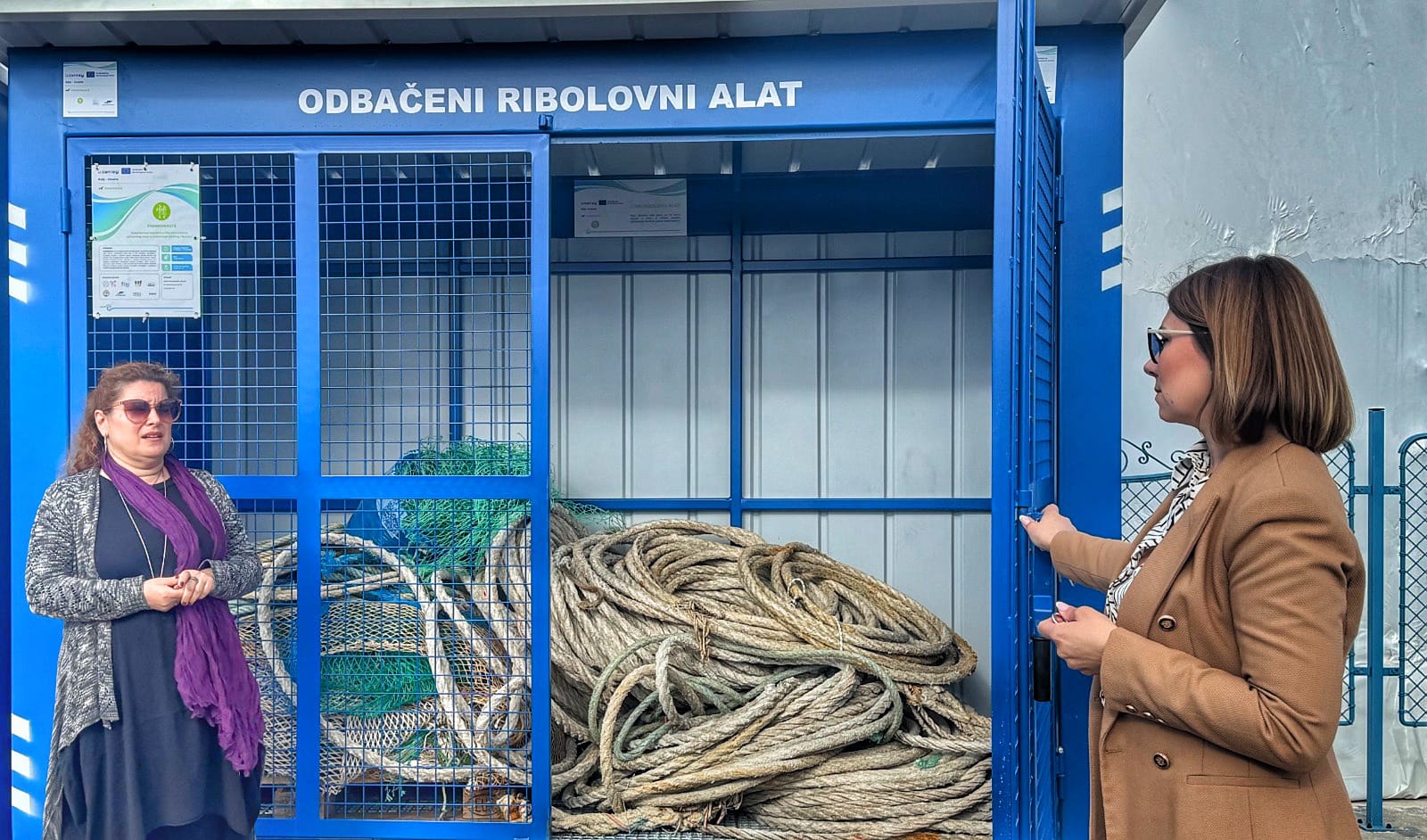
On Monday, 26 January 2026, new equipment intended for the comprehensive collection of waste generated in and brought into the fishing port was officially put into operation in the fishing port of Tribunj. Although the port had already been adequately equipped for the reception of various types of waste, this new investment further improved the quality of the system, particularly in terms of the separation and management of special categories of waste. The newly acquired equipment includes a storage container for old and discarded fish boxes, three mobile ecological units, two intended for special categories of waste and one for old fishing nets, a 1,000-litre eco-container for oily rags and filters, six containers for separate waste collection (mixed municipal waste, plastic, paper, and glass), a forklift with a waste compactor for containers with a volume of 800 and 1,100 litres, three notice boards with sliding doors, and a video surveillance system consisting of a digital video recorder and three cameras.
The equipment was procured within the FishNoWaste project, financed by the EU cross-border cooperation programme Interreg Italy–Croatia, with a total investment value of approximately EUR 30,000.
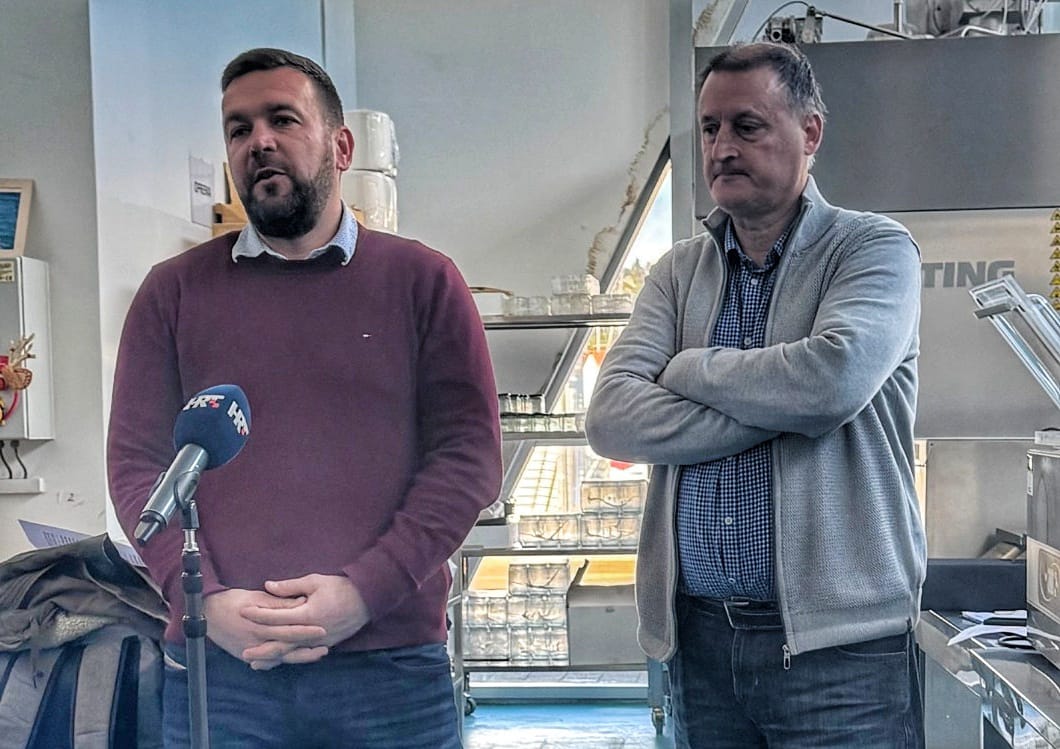
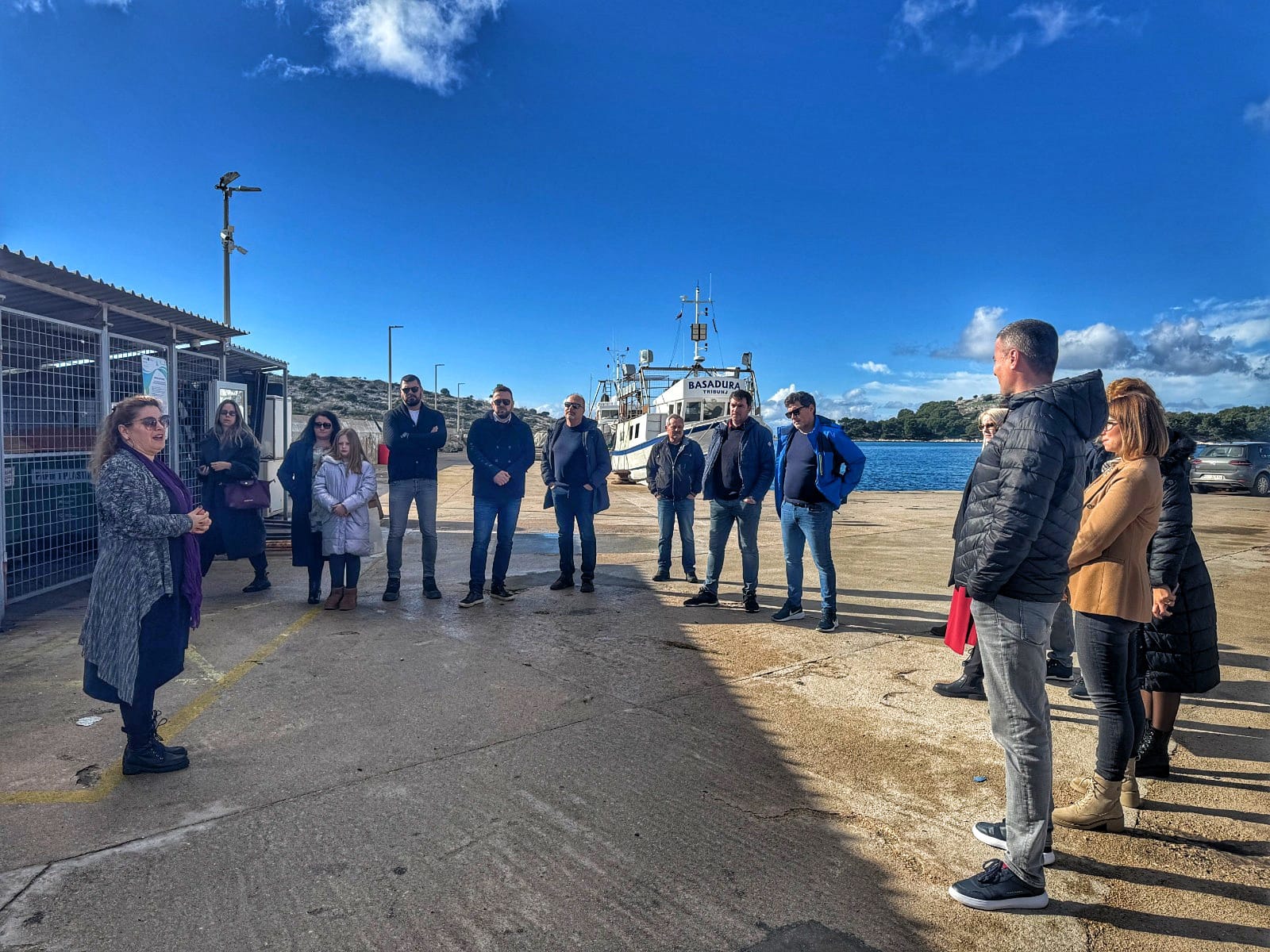
The event was attended by around twenty participants, including fishermen from Tribunj, project partners, representatives of the local government and the Tribunj Tourist Board, the Fisheries Directorate from Šibenik, the LAGUR Galeb, and other relevant stakeholders. Scientists from the Institute of Oceanography and Fisheries in Split, Dr Pero Tutman and Dr Dubravka Bojanić Varezić, as leaders of the project activities in the fishing port of Tribunj, presented the activities carried out so far within the project. This was followed by presentations from representatives of the Public Institution RERA S.D. and the association Sunce. After the presentations, participants visited the newly installed equipment in the port. The event was also covered by Croatian national television (HRT), which presented the project in a four-minute report broadcast during the prime-time main news programme, Dnevnik 2.
The FishNoWaste project is a continuation of the long-standing and highly successful cooperation between the Institute of Oceanography and Fisheries and the fishing cooperative Adria. This cooperation began in 2013 with the DeFishGear project and continued through the ML-REPAIR and Mreža Zna projects, leading to the current FishNoWaste project. Over the course of this collaboration, the Institute has invested approximately EUR 100,000 in the fishing port of Tribunj through EU-funded projects, providing equipment for waste collection, protective clothing and footwear for fishermen, and various non-material contributions. These projects have been more than successful and clearly visible, and they have encouraged fishermen throughout the Adriatic to organise the systematic collection of waste from fishing nets.
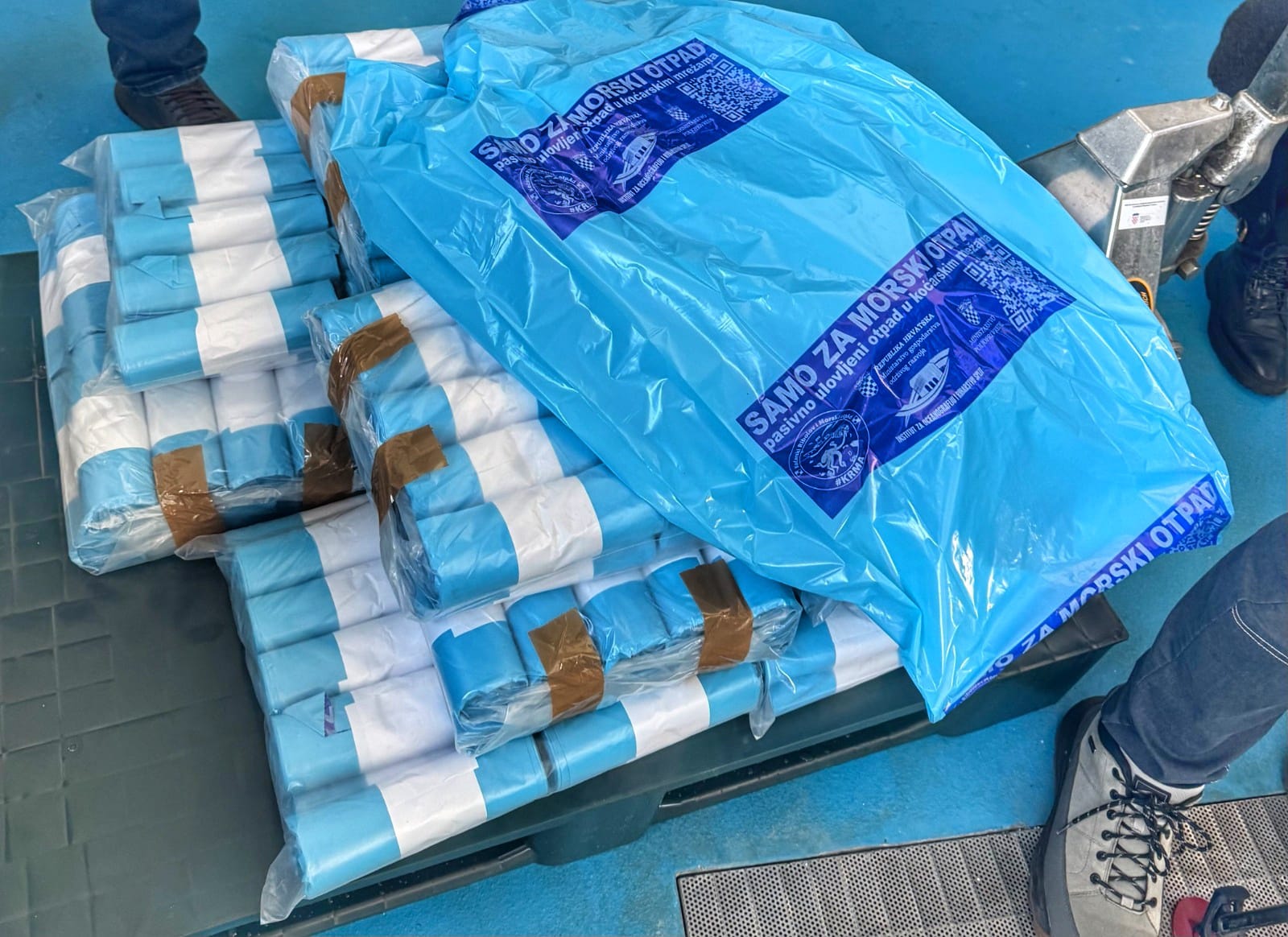
For almost fifteen years, fishermen from Tribunj have been at the forefront of efforts to protect the marine environment. They have been consistently collecting marine litter from their fishing nets and disposing of it in appropriate containers. To date, they have removed nearly 500 tonnes of waste from the sea, an exceptionally significant amount that has thus been prevented from remaining in the marine environment.
Fishing activities inevitably generate various forms of waste that can directly or indirectly end up in the sea. At the same time, however, fisheries can play an important role in reducing marine litter. Fishing ports are key locations where significant quantities of different types of waste are deposited, including marine litter, municipal and bulky waste, as well as waste oils, filters, batteries, oily rags, and other specific waste streams. The FishNoWaste project therefore aims to develop a strategy for the comprehensive collection of waste generated by trawl fisheries and disposed of in fishing ports, and to improve waste management structures through the development and implementation of good practices, involving all stakeholders connected to fisheries, including fishermen themselves.
The project connects research institutions, fishing associations, fish markets, port authorities, public administration bodies, local governments, and non-governmental organisations from Italy and Croatia. The lead partner of the project is the University of Padua, with ISPRA – the Italian Institute for Environmental Protection and Research – as an associated partner. Other Italian partners include Cooperative M.A.R.E. S.c.a.r.l., with the associated partner Comune di Rimini, the Company for Public Services in Chioggia, and the Workers of the Sea Cooperative. On the Croatian side, project partners are the Institute of Oceanography and Fisheries, the Public Institution RERA S.D. for coordination and development, the Sunce Association for Nature, Environment and Sustainable Development, and the Port Authority of Split.
Project activities are being implemented in the fishing port of Tribunj, through cooperation between the Institute of Oceanography and Fisheries and the fishing cooperative Adria, as well as in the fishing port of Brižine near Kaštel Sućurac, in cooperation between the Port Authority of Split and the fishing cooperative Friška riba.